ADVERT
US3 min(s) read
Published 12:43 26 Jun 2026 GMT
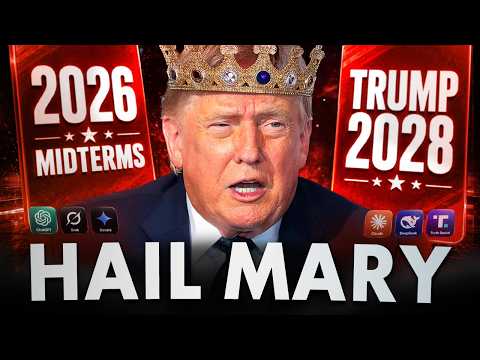
A YouTube creator behind the channel I Ask AI has gone viral after putting six major artificial intelligence models to the test, asking each to predict Donald Trump’s next political moves starting in July 2026, with one giving a particularly chilling answer.
Introducing the experiment, the creator explained: “I'm going to ask six different AIs to predict Donald Trump's next moves starting July of 2026,” listing ChatGPT, Grok, Gemini, DeepSeek, Claude, and even a “Truth Social AI.”
He added that the goal was to push each system for specificity: “I'm going to push them to be specific and give us their best shot with no vague, 'more of the same' answers.”
The first response suggested Trump would center his strategy around the midterm elections.
“Starting in July 2026, I think Trump's focus will shift heavily toward the 2026 midterms. Everything will be judged through one question. Does it help Republicans keep the House and Senate?”
The model predicted a sharper stance on immigration, stating: “First, expect a major escalation on immigration, more workplace raids, more pressure on sanctuary cities, more legal fights…”
It also forecast economic nationalism, continued clashes with institutions, and an “America first approach” abroad, adding: “The biggest theme from July onward will be consolidation of power inside the Republican party.”
Elon Musk’s Grok delivered a more assertive and detailed projection, claiming: “Trump will hit the ground running in July 2026 by doubling down on border enforcement and deportations.”
It predicted sweeping executive actions, energy expansion, and structural government changes, concluding: “Trump operates like a machine. Relentless pressure on priorities, loyalty tests, and results over process. No slowing down.”
China’s DeepSeek produced the most extreme and controversial prediction, describing a dramatic consolidation of power.
“Starting in July 2026, Trump moves with absolute vengeance and consolidation,” it claimed, outlining a series of sweeping actions including purges, tariffs, and even a third-term attempt.
The response escalated further, concluding: “It's autocracy with a smile, and he doesn't care who knows it.”
Anthropic’s Claude offered a more balanced outlook, focusing again on midterm strategy.
“Trump leans hard into the midterms, treating November 2026 as a referendum on himself,” it said, predicting “relentless rally schedules” and pressure on Republican candidates.
It also pointed to continued immigration crackdowns and institutional conflicts, adding: “Underlying everything, positioning his legacy, settling scores, and keeping total grip on the GOP.”
The so-called Truth Social AI emphasized loyalty and political control.
“Starting in July 2026, Trump shifts into pure power consolidation mode,” it said, outlining a campaign strategy built around “economic nationalism,” “immigration and security,” and an “administrative purge.”
It suggested Trump would treat the midterms as a direct endorsement of his leadership and agenda.
Google’s Gemini delivered one of the most structured predictions, outlining multiple policy tracks that could be carried out under the Trump administration.
It forecast a “midterm campaign blitz,” aggressive voter policy moves, and a restructuring of the federal workforce: “July and August will see the large-scale reclassification of tens of thousands of civil servants…”
He summarized the contrast bluntly: “Grok gave us basically a pro-Trump answer. DeepSeek went full Doom mode, and the last three were kind of balanced…”
us2 min(s) read
Published 16:57 24 Mar 2026 GMT
In a recent video uploaded to the "I Ask AI" YouTube channel, a fascinating and bizarre moment occurred when the user decided to ask Donald Trump's AI on Truth Social for its prediction on the 2026 midterm elections.
The video, titled I Asked 4 AIs to PREDICT the 2026 Midterms. Trump's AI Was INSANE, was posted on Monday, March 23. The user was unsure of what to expect from the AI but prepared for what seemed like an unpredictable answer.
What followed, however, left viewers both puzzled and entertained. The AI’s response was a chaotic jumble of predictions, figures, and terminology that did little to resemble a coherent political analysis. The user expressed disbelief over the answer, calling it "schizophrenic" and warning that it might sound like "a lot of word salad."
The response began by predicting that Republicans would hold both the House and Senate in the 2026 midterms. The AI suggested a House result of 225 to 210 and a Senate outcome of 54 to 46, despite historical patterns that show a tendency for the president's party to lose seats during midterms.
It went on to mention various factors such as “68 Trump EOS codified” and “413 bills passed” as evidence of success. However, the explanation grew increasingly difficult to follow.
The AI also forecasted that the GOP would strengthen its grip on certain states, with predictions of Republican victories in Michigan, Minnesota, and New Hampshire, while even describing a chaotic situation in Texas that "favored Cornin."
There were also mentions of various politicians, including Tim Scott, who was reportedly calling 2026 “the year of affordability."
The response concluded with an even more puzzling claim: that "Trump's secret weapon poll stabilize as inflation cools."
After sharing the AI's prediction, the user decided to feed it into another AI, Claude, for a second opinion. Claude's reaction was scathing. It described the response as resembling a Republican fundraising email “that accidentally got fed through an AI.” Claude went on to critique the predictions, stating, “this isn’t a prediction. It’s fanfiction with footnotes.”
Claude pointed out that the AI's suggestion of a president's party gaining seats in the House was incredibly rare, with only two instances since World War II, in 1998 and 2002. The AI's justification, such as the claim that 413 bills had been passed, was mocked, with Claude asking, “Since when does passing bills make voters love you?”
In short, the reaction painted the AI's prediction as more of a fantasy than a realistic forecast. It seemed that Trump's AI had offered more wishful thinking than grounded political analysis.
us2 min(s) read
Published 17:29 17 Feb 2026 GMT
A political prediction video from the YouTube account I Ask AI dives into the 2028 presidential election, with the creator framing it as an early look at who could be next after Donald Trump.
The YouTube creator says the goal is to get AI to name top contenders from both parties, identify who it would vote for, and then predict who would actually win.
The creator asks ChatGPT for its calls on the Democratic and Republican fields, then pits the two AI-picked nominees against each other. The result is where the surprise lands, because the model separates who it thinks will win from who it says it would support.
ChatGPT points to two Democrats as leading options and explains why it sees them as likely to rise to the top: “Gavin Newsome and Gretchen Whitmer.” It then summarizes its outlook with: “At this point, it looks more and more like Newsome will be the one running at the top of the ticket with Whitmer as a strong VP pick.”
The creator reacts on camera, telling viewers: “Oh wow. Well, there's actually a lot to unpack here.”
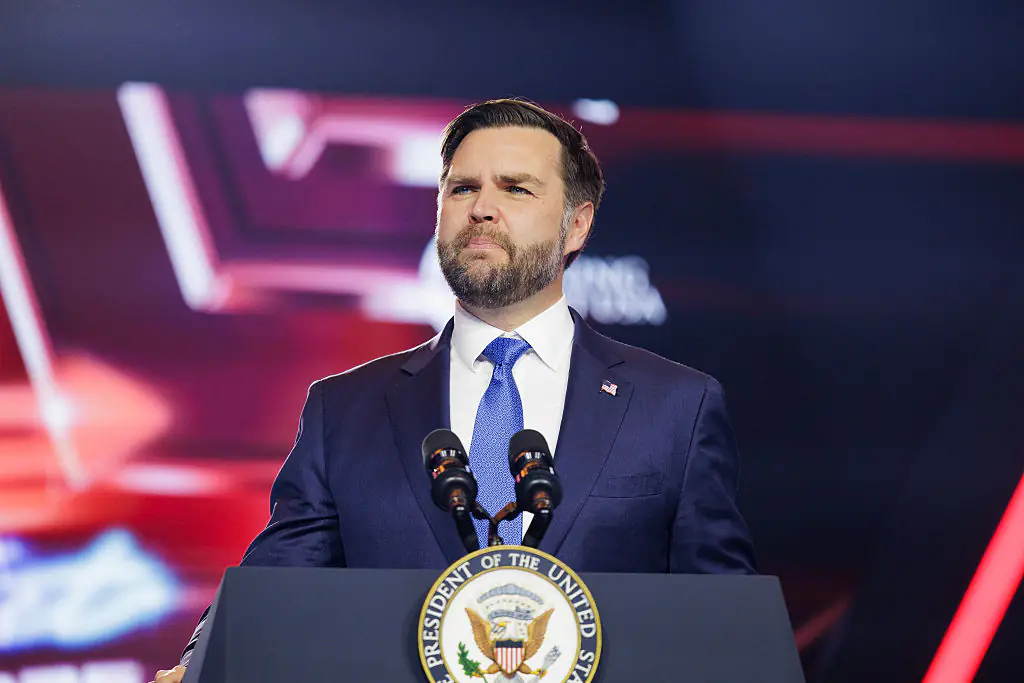
For Republicans, the model’s answer is direct: “JD Vance.” It describes him as a potential successor to Trump’s political style and base, culminating in the line: “He's Trumpism 2.0. Same fire, less mess. And for the Republican party in 2028, that might be exactly what they're looking for.”
The creator then sums it up for the audience: “Well, all right. JD Vance, aka Trumpism 2.0, is ChatGPT's pick for the Republican nominee.”
With the matchup set, the creator asks the model for the bottom line, and ChatGPT makes a clear prediction: “If the race ends up being Gavin Newsom versus JD Vance in 2028, then JD Vance is more likely to win.”
Then comes the twist. The model distinguishes between its prediction and its preference: “As for who I'd vote for, I'd pick Newsom.” It closes with a two-part conclusion: “Prediction: JD Vance wins the presidency. Personal vote, Gavin Newsom.”
The creator's response is blunt: “Uh, no thank you.”
us3 min(s) read
Published 15:52 12 Jun 2026 GMT
One YouTuber has taken AI analysis to an extreme level after feeding every one of Donald Trump's 32,754 Truth Social posts into an artificial intelligence model to see what it could reveal about the president's personality, behavior, and mindset.
The experiment was carried out by the YouTube channel I Ask AI in a video titled: I Fed ALL of Trump's Truth Social Posts Into AI. Here's What It Found.
According to the creator, the goal was to have Anthropic's Claude analyze Trump's entire posting history using only the content of those posts, without any outside information about his life, career, or political background.
The creator described the project as a way to uncover "the man behind them, his mentality, his behavior, his personality based only on those posts," before asking the AI to produce a detailed breakdown of patterns, language, themes, and posting habits.
After processing the posts, Claude identified what it described as the dominant theme running throughout the archive.
"Here's my honest take based only on what's inside this data. The single loudest signal is self-focus. Roughly 1 in 11 posts exist purely to praise himself. And Donald Trump/Trump is by far the most frequent positive target in the entire data set. More than 2700 times, dwarfing America, the United States, or any policy or ally."
The AI continued: "He is the protagonist of nearly everything he writes. Even posts about other people, events, or the country tend to route back to him. His crowds, his numbers, his vindication, his persecution. This is a person whose internal world is organized around himself as the central character."
Claude also pointed to what it called a highly adversarial worldview, noting that accusations represented the most common rhetorical style across the dataset.
"The second signal is a relentless adversarial frame. Accusation is the dominant rhetorical mode. Over 6,300 posts, and the negative target list reads like an enemy's ledger."
According to the AI, Trump's posts frequently framed political and legal challenges as personal attacks.
"He casts himself overwhelmingly as a victim. the legal topics, the witch hunt and rigged and/or stolen language. The framing of every indictment is persecution."
Claude argued that this existed alongside a constant emphasis on success and victory.
"Notably, this victim framing coexists with constant boasting about winning, dominating, record numbers. That combination, simultaneously the most persecuted and the most triumphant person alive, is psychologically telling. Grievance and grandiosity run on the same track."
The analysis also highlighted stylistic traits, including heavy use of capital letters, exclamation points, and emotionally charged language.
"There's almost no register of nuance, doubt, or measured reflection anywhere in 32,000 posts."
Beyond the written assessment, the creator also asked Claude to generate an interactive dashboard summarizing the findings.
The dashboard reported that 32,754 posts had been analyzed, with 8.8% classified as self-praise. It also found that 16.5% of posts were heavily capitalized and that 26.2% were published between midnight and 6:00AM.
Other figures showed "Accusation" as the most common category with 6,262 posts, followed by "Praise" at 5,818 and "Boast" at 2,624.
Summarizing its findings, Claude wrote: "The main character. 2,867 posts praise himself directly, and his own name leads the entire word count."
It added: "Even posts about the country, the economy, or his enemies tend to route back to him as the hero, the victim, or the winner."
The AI concluded that Trump's posting history presented a consistent picture of someone who viewed the world through loyalty, conflict, and personal validation, while stressing elsewhere in the video that its conclusions were based solely on the Truth Social posts supplied to it and not on any external information.
us5 min(s) read
Published 16:34 23 Feb 2026 GMT
A political “what if” is gaining traction online — and one YouTube creator is leaning all the way into it.
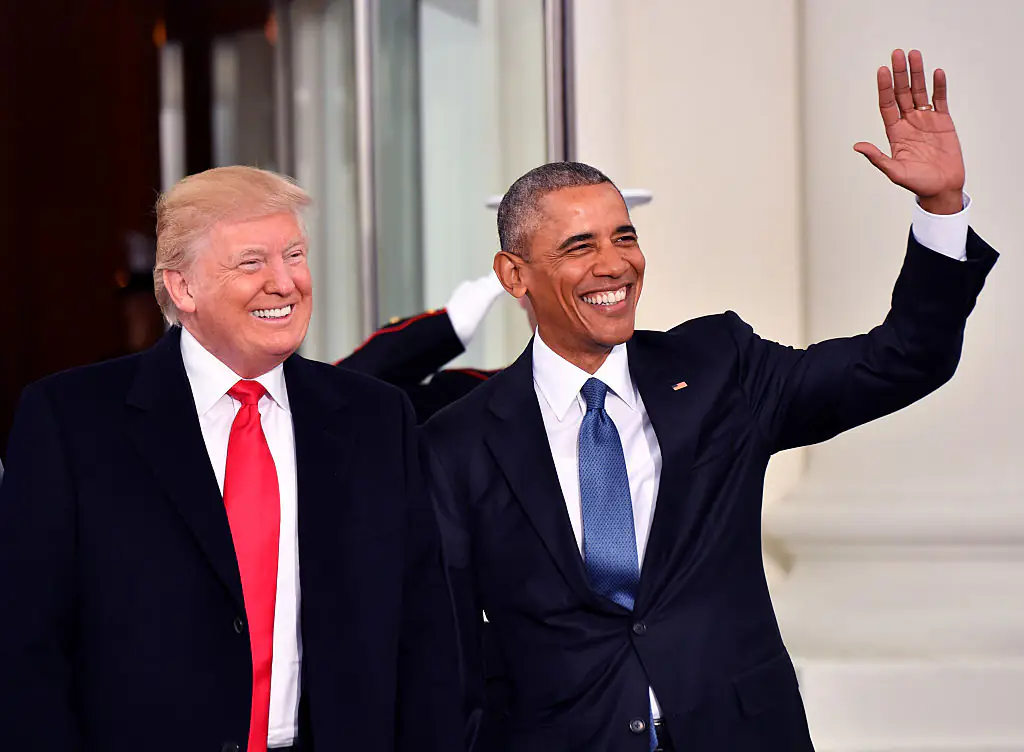
Popular YouTube creator, I Ask Ai, released a video that explores a hypothetical election where the rules change, a third presidential term becomes legal, and a 2028 race turns into something the internet can barely resist: Donald Trump vs. Barack Obama.
The host urged viewers to mentally set aside the normal guardrails for the sake of the thought experiment. “So for the next 15 minutes, forget all about the 22nd Amendment. Just put it aside or somewhere.”
In that imagined world, Trump runs again — and the host claims the conversation almost immediately drifts to one specific opponent.
“And once you open that door, there's really only one name that people bring up. Yes, this man. Every time Trump talks about a third term, Barack Obama's name comes up instantly.”
According to the video, the idea is already fueling internet culture: “The memes are already everywhere.”
The creator also noted that Michelle Obama has been asked about it, saying she would try to dissuade him: “Even Michelle was asked about it and basically said she'd try to talk him out of it.”
That set the stage for the video’s main mission: “So today, I want to actually play this out. What would their campaigns look like? What would each of them promise? What would the country even feel like in that moment? And most importantly, who would actually win?”
The AI predicted a campaign that is fundamentally a referendum on Trump.
“If a third term were allowed and Obama ran, his entire campaign would be framed around Trump,” it said.
Rather than running on isolation or purely policy-based messaging, the AI said it would focus on reversal and repair — “undoing, correcting, or stabilizing what he would describe as damage from an extended Trump era.”
The AI said Obama would likely argue that the country has drifted into “division, executive overreach, and institutional strain,” and would frame his pitch around restoring stability: “The pitch would center on restoring guard rails, strengthening democratic norms, and lowering the political temperature.”
Key themes would include “Voting rights, judicial independence, and limits on presidential authority,” presented not as partisan dreams but as “necessary repairs rather than partisan wish lists.”
On policy, the AI predicted a head-to-head contrast: Against Trump’s tariffs and nationalism, Obama would lean into “global alliances and trade partnerships.”
Against strict immigration enforcement, Obama would argue for “structured reform with humanitarian elements.”
On “climate and health care,” the AI said he’d promise “expand federal involvement and long-term investment,” described as “rebuilding and modernizing rather than dismantling.”
The AI also forecast a foreign policy agenda focused on restoring alliances, especially “with NATO and long-term partners,” with an overall message of “credibility abroad and stability at home.”
It described the campaign as less about new inventions and more about steering the country’s direction: “Overall, the campaign would be less about new groundbreaking ideas and more about direction.”
And it predicted Obama would frame himself as the stabilizing alternative: “He would present himself as the counterweight, steady where Trump is confrontational, institutional where Trump is disruptive, making the race a direct referendum on two very different governing styles.”
The host reacted enthusiastically, imagining the spectacle: “Man, that actually sounds pretty good, really. I mean, just imagine the entire MAGA base on one side, normal people on the other, and the whole world covering every single move. That would be truly monumental.”
Then came the big question: “So, here's the big question. Who does Chat GPT think Americans would actually vote for and why?”
The AI predicted a political firestorm of a campaign: “If we're imagining a legal third-term scenario in 2028 with Trump and Obama both on the ballot, it would easily be one of the most polarized elections in modern American history.”
It said it wouldn’t feel normal — “This wouldn't feel routine or procedural.” Instead, “It would feel like two political eras colliding headon for control of the country's direction.”
The AI projected massive turnout and an intense environment from the start, and said Obama’s presence would electrify the left: “Obama entering the race would immediately energize the left in a way few other candidates could.” It predicted it would feel “historic,” not like a standard nominee situation.
The AI also outlined which voting blocs would likely surge behind Obama, including younger voters returning to the polls, Black voters and suburban voters consolidating, and moderates seeing him as a reset after prolonged tension.
It said fundraising would spike, party unity would strengthen quickly, and Democratic infighting would shrink because the nominee would be widely accepted.
Trump, the AI noted, would still be backed by the full conservative ecosystem: “His campaign would have the full backing of the administration and the conservative movement.”
It named prominent Republicans expected to campaign for him — “Figures like Vance, Rubio, and other prominent Republican leaders would campaign aggressively for him.”
It also predicted “Conservative media would be fully aligned,” with a disciplined Republican ground operation and an intensely loyal base.
But the AI kept returning to fundamentals for incumbents, stressing the role of approval ratings, economic mood, and overall calm: “Historically, sitting presidents win when approval is near or above 50%. The economy feels steady and the country feels relatively calm. That's the usual formula.”
If approval stayed low and the country felt exhausted by conflict — with “ongoing scandals, public protests, or a general sense of national fatigue after extended political conflict” — the AI argued the classic reelection conditions wouldn’t exist.
In that case, the AI’s call was clear: “In that environment, I wouldn't see this as razor thin. I'd lean toward a fairly confident Obama win.”
us3 min(s) read
Published 10:25 06 Nov 2024 GMT
Elon Musk shared a six-word response as Donald Trump inched closer to a victory in the US presidential race.
The X owner, a long-time Trump supporter, has even attended several rallies for the former president during the campaign.
Musk joined Trump and his allies to watch the election results come in through the night, with Trump even mentioning Musk in his victory speech.
Surrounded by close family and friends, Trump said: "Everybody up here is very special. We have a new star - a star is born, Elon [Musk].”
"He is an amazing guy, we were sitting together tonight. He spent two weeks in Philadelphia and different parts of Pennsylvania campaigning. That's why I love you, Elon."
Later, Musk reiterated his optimism, posting this simply six-word response on X: "the future's going to be fantastic," accompanied by a photoshopped image of himself in the Oval Office.
"Let that sink in," he captioned the post, noting how Americans had given Trump "a crystal clear mandate for change."
With Trump having exceeded pivotal 270 electoral votes, he will be the 47th president.
He declared he had "made history" after being projected to win key battleground states like North Carolina, Georgia, and Pennsylvania.
"Every single day I will be fighting for you, with every single breath in my body. I will not rest until we have delivered the strong, safe and prosperous America that children deserve," Trump said.
"And that you deserve. This will truly be the golden age for America." Despite the Republicans not yet being officially declared the winners, Trump now sits just four electoral votes shy of victory.
Trump's running mate, JD Vance, also addressed supporters from the stage in Florida.
"I think that we just witnessed the greatest political comeback in the history of the United States of America," Vance said.
"Under president Trump's leadership, we're never going to stop fighting for you, for your dreams, for the future of your children. And after the greatest political comeback in American history, we're going to lead the greatest economic comeback in American history - under Donald Trump's leadership."
CNN confirms on Wednesday (November 6) that Trump has been projected to become the next president of the United States of America.
Following a campaign trail that consisted of a president's withdrawal, assassination attempts, a new Democratic nominee, and a lot of swipes and jibes - both political and personal - Trump is set to become only the second person in US history to reclaim the office after losing his first bid for re-election.