ADVERT
US2 min(s) read
Published 14:42 15 Jul 2026 GMT
Last month, the European Broadcasting Union released new guidelines banning sports photographers and videographers from taking footage of female athletes that could appear “sexualized”.
Since the new rules were released, the backlash waged against them on social media has stunned the sporting world.
The paper titled: "Raising the Bar: Guidelines for respectful media coverage in women's athletics", includes detailed illustrations on what shots are acceptable and which could be considered inappropriate.
It also stated: "This is not a list of restrictions. Across high jump, pole vault, horizontal jumps and running events, the report demonstrates how the most compromising shots can be avoided with no loss of storytelling or visual quality."
Sadly unsurprisingly, the guidelines sparked a tense discussion and became the subject of thousands of crude jokes about women's sport.
One misogynistic X user said: “You basically killed any interest in female sports.”
Another chimed in with a similar sentiment, writing: “Volleyball viewership is gonna go down by 90%.”
A third made a suggestion that incorrectly shifted the blame from men to the women themselves, saying: “Or just have women wear some clothes when they compete, is it really necessary for women to constantly just wear underwear when playing sport?”
In response, another commenter pointed out how deep-rooted the casual sexism within women’s sports is, noting: “Actually, without exception, the sports governing bodies REQUIRE women to wear those skimpy outfits.”
Published by the European Broadcasting Union (EBU) in collaboration with European Athletics and prominent female athletes, "Raising the Bar" is a set of guidelines designed to combat the sexualization and objectification of women in sports media.
The 23-page document provides practical visual examples for camera operators and directors to avoid compromising, low-angle, or unnecessary slow-motion shots that divert focus from the athletes' athletic abilities.
Ultimately, these regulations have established a respectful broadcasting standard that prioritizes the technical skill and strength of female competitors, rather than their objectifying physical attributes.
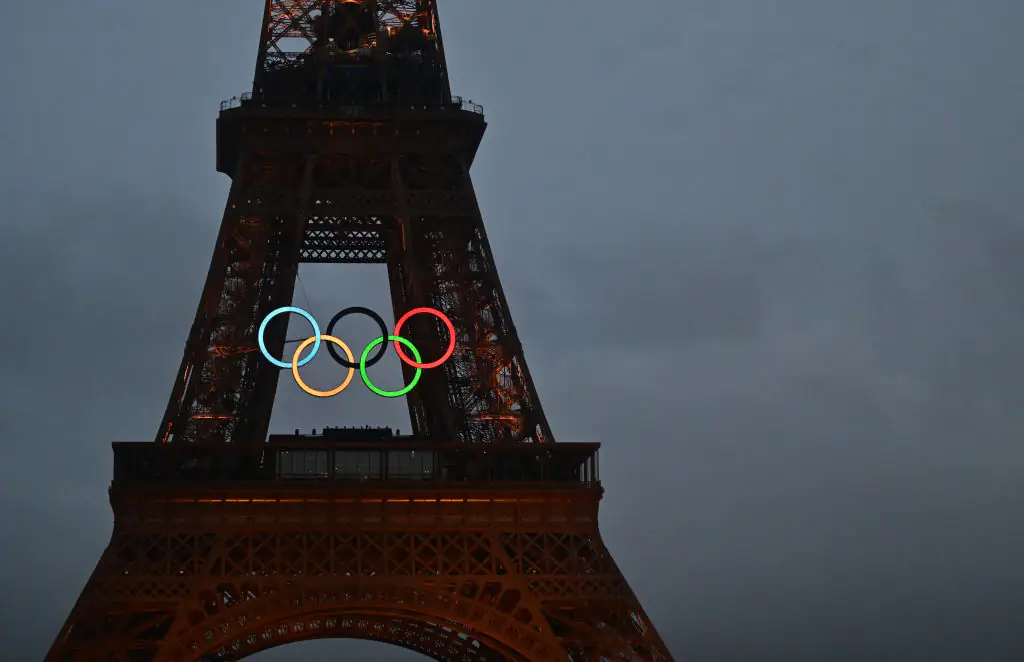
Within the industry, an important discussion around the issue of “sexualized” shots of female athletes surfaced during the 2024 Paris Olympics when the CEO of Olympic Broadcasting Services, Yiannis Exarchos, ordered camera operators to film both male and female athletes the same way to avoid "stereotypes and sexism".
world2 min(s) read
Published 11:44 13 Jul 2018 GMT
The objectification of women in sports is a tale as old as time. Whether that is scantily clad "grid girls" standing in front of cars before the Grands Prix or the Darts Corporation's "walk-on girls", there is a long history of women being treated as accoutrements in live sporting competitions. Now while the aforementioned practices have since banned the use of both "grid girls" and "walk-on girls", one game where women are still prized solely on their looks is, of course, the football.
Certainly, whenever watching televised football, the camera always seems to zoom in on one of two things: children holding amusing signs, and beautiful women.
This practice may be about to change, however. In a bid to tackle sexism, television stations have been told by FIFA to stop zooming in on attractive women within the crowds.
The head of sustainability and diversity at FIFA, Federico Addiechi, has spoken positively of the changes. "We've done it with individual broadcasters. We've done it with our host broadcast services," he stated, before explaining that FIFA is prepared to "take action against things that are wrong".
There have been an unprecedented number of reports of sexism at this year's World Cup, with female reporters allegedly being harassed, not just online, but in public too. Certainly, while pre-tournament concerns that Russia 2018 would see a barrage of homophobic and racist attacks have not materialised, accounts of sexist behaviour have been rife.
The anti-discrimination collective, Fare Network, have been working with FIFA to monitor behaviour and attitudes in and around the World Cup games, and its executive director, Piara Powar, has since stated that sexism has been the biggest issue at Russia 2018.
Speaking to journalist at a press conference about diversity issues before England's semi-final against Croatia, Powar said that he and his time have "documented more than 30 cases" of mostly Russian women being "accosted in the streets" by male football fans. He added, however, that the real number of incidents is likely to be "10 times this".
He also said that there have been several cases of female reporters being kissed or groped while on air.
When quizzed on what FIFA could do to tackle such behaviour, Addiechi explained that the federation has been working with local organisers and the Russian police to identify these fans, some of which have since lost their FAN-IDs and been ordered out of the country.
Addiechi has since clarified that halting the zooming in on "hot women" in the crowds is "one of the activities that we definitely will have in the future - it's a normal evolution."We have done it on a case-by-case basis when some cases arose and they were pretty evident."
"We've done it with individual broadcasters. We've done it as well with our host broadcast services," he continued, before adding that it is not yet part of "proactive campaign".
sport2 min(s) read
Published 16:34 18 Nov 2021 GMT
The International Olympic Committee has introduced a groundbreaking new framework for transgender and intersex athletes.
This week the committee announced that they would no longer require athletes to undergo controversial procedures or treatments, including hormone level modifications, to compete, NBC News reports.
In a six-page document, the IOC outlined 10 principles "grounded on the respect for internationally recognized human rights," and set out their new framework.
Per NBC News, the document reads: "The Framework recognizes both the need to ensure that everyone, irrespective of their gender identity or sex variations, can practice sport in a safe, harassment-free environment that recognizes and respects their needs and identities."
As well as removing the need for controversial treatments, the new framework also reverses the IOC's previous position by concluding there should be no presumption that trans women have a biological advantage over natal women.
These new rules come just three months after the Tokyo Olympics, which saw the first transgender and intersex athletes compete in the Games' history. They were developed following an "extensive consultation" with athletes, other sports organizations, and human rights experts, and will replace guidelines released by the IOC in 2015.
The 2015 framework put a limit on athletes' testosterone levels and required some to undergo treatments the IOC now describes as "medically unnecessary." Before 2015, the IOC required athletes to undergo genital surgery in order to compete.
LGBTQ athletes and advocates welcomed the new guidelines. Canadian soccer gold medalist Quinn, who in July became the first openly trans athlete to compete in the Olympic games, said in a statement to Athlete Ally that the new rules were 'groundbreaking'.
"Far too often, sport policy does not reflect the lived experience of marginalized athletes, and that's especially true when it comes to transgender athletes and athletes with sex variations," they said.
"This new IOC framework is groundbreaking in the way that it reflects what we know to be true - that athletes like me and my peers participate in sports without any inherent advantage, and that our humanity deserves to be respected," they added.
Transgender triathlete Chris Mosier - who became the first out trans athlete to compete on a US national team in 2016 - wrote on Twitter:
"The new IOC Framework makes clear that no athlete has an inherent advantage and moves away from eligibility criteria focused on testosterone levels, a practice that caused harmful and abusive practices such as invasive physical examinations and sex testing."
sport2 min(s) read
Published 14:30 03 Aug 2021 GMT
The International Olympic Committee will be modifying its rules and regulations regarding transgender athletes in order to support inclusiveness at the global sporting event.
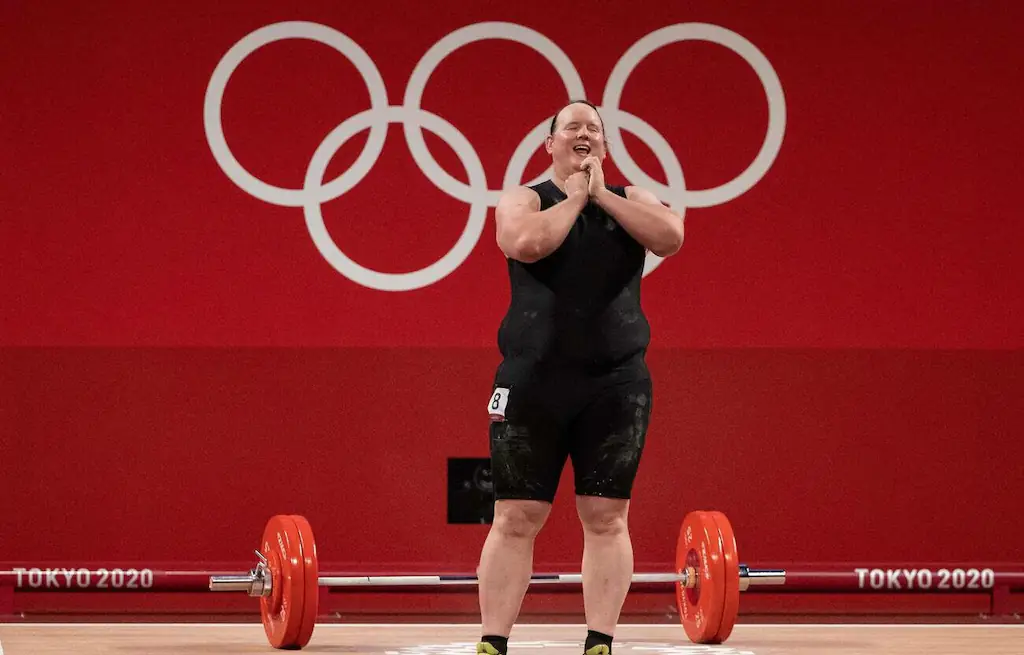
The Tokyo Olympic Games has become the focus of much debate after the IOC officially backed weightlifter Laurel Hubbard, who was assigned male at birth, in her bid to represent New Zealand in the women's +87kg category
Laurel Hubbard, 43, was the first openly transgender woman to compete at the Games before bowing out of the competition on Monday, August 2, after she missed all of her snatch lift attempts.
It was the IOC's amendments to its qualifying guidelines in 2015 that paved the way for Hubbard's inclusion in the category.
In order to be eligible for a spot in the women's category, the athletes' testosterone levels are required to be under 10 nanomoles per liter for at least 12 months prior to their first competition.
The IOC is now hoping to update its 2015 ruling, with the committee's medical and science director, Dr. Richard Budgett, revealing that the organization is planning to introduce new guidelines.
Dr. Budgett said, per The Guardian: "I absolutely accept that things move on. At the time the 10 nanomoles per liter was set because we thought that was the lower level for men.
"We know now that they go down to seven and women can be higher as well. Agreeing on another number is almost impossible and possibly irrelevant. You can debate that endlessly."
He went on to say that the new framework will prioritize both fairness and inclusion, and also implied that individual sports will ultimately be responsible for eligibility criteria as opposed to imposing a "one-size-fits-all" ruling.
Dr. Budgett continued: "There is some research, but it depends on whether you are coming from the view of inclusion as the first priority or absolute fairness to the nth degree being the priority.
"If you don't want to take any risks at all that anyone might have an advantage, then you just stop everybody."
"If you are prepared to extrapolate from the evidence there is, and consider the fact there have been no openly transgender women at the top level until now, I think the threat to women's sport has probably been overstated," he added.
sport2 min(s) read
Published 10:10 23 Jul 2021 GMT
Female gymnasts representing Germany at the Tokyo Olympics showed off their full-length unitards in a bid to take a stand against the sexualization of their sport.
On Thursday, July 22, Elisabeth Seitz, Kim Bui, Pauline Schaefer, and Sarah Voss gave us all a glimpse of their new pink and black outfits, which they wore during practice.
The look was a noticeable departure from the leg-baring leotards typically worn by gymnasts at sporting competitions.
Sharing two photos of the team's new competition gear on Instagram, Schaefer wrote: "Our podium training went really well. We were able to call up our performance and introduce ourselves to the judges.
"Fine-tuning will be done again until Sunday and then it will finally start. How do you like our new outfit?"
Bui posted the same two photos on her Instagram account, this time with the caption: "Nice arena, good podium training, beautiful unitards, and a lot of joy."
Team Germany has actually been donning unitards since spring. According to the German Gymnastics Federation, the switch to full-length outfits is a statement against "sexualization in gymnastics", per BBC News.
Back in April, Bui wrote in an Instagram post that the team wants to "encourage all gymnasts around the world to be able to wear this if they want to feel better! It should be a gymnast’s choice to wear what’s she (or he) feels comfortable with! Long legs leotards can also look aesthetically pleasing!"
Per BBC News, Voss opened up about the move to local news outlets, saying: "We hope gymnasts uncomfortable in the usual outfits will feel emboldened to follow our example.
"We, women, all want to feel good in our skin. In the sport of gymnastics, it gets harder and harder as you grow out of your child’s body. As a little girl, I didn’t see the tight gym outfits as such a big deal. But when puberty began, when my period came, I began feeling increasingly uncomfortable."
According to the above publication, the new outfits are perfectly in line with official rules and regulations, which allow competitors in the sport to wear a "one-piece leotard with full-length legs - hip to ankle".
This comes after Norway's women's handball team was hit with a fine of more than €1,000 after they defied the rules by wearing shorts rather than bikini bottoms at the European Championships.
us3 min(s) read
Published 11:53 27 Mar 2026 GMT
The International Olympic Committee has confirmed that transgender women athletes will be banned from competing in all female events at the Olympic Games, starting with the 2028 Games in Los Angeles. The decision applies across both individual and team competitions and forms part of a wider eligibility policy overhaul.
According to the IOC, the new rules are designed to ensure fairness in women’s sport. The policy will not be applied retroactively and will not affect grassroots or recreational sports programs. Instead, it focuses solely on elite Olympic competition and related IOC events.
The move has quickly drawn global attention, including a response from US President Donald Trump, who took to Truth Social to react to the announcement. He wrote: "Congratulations to the International Olympic Committee on their decision to ban Men from Women’s Sports. This is only happening because of my powerful Executive Order, standing up for Women and Girls!"
The International Olympic Committee stated that eligibility for female categories will now be limited to biological females. This will be determined through a one-time test for the SRY gene, which the IOC says is fixed throughout life and provides evidence of male sex development.
The organization said the policy "protects fairness, safety, and integrity in the female category" and pointed to scientific findings that males retain physical advantages in strength, power, and endurance.
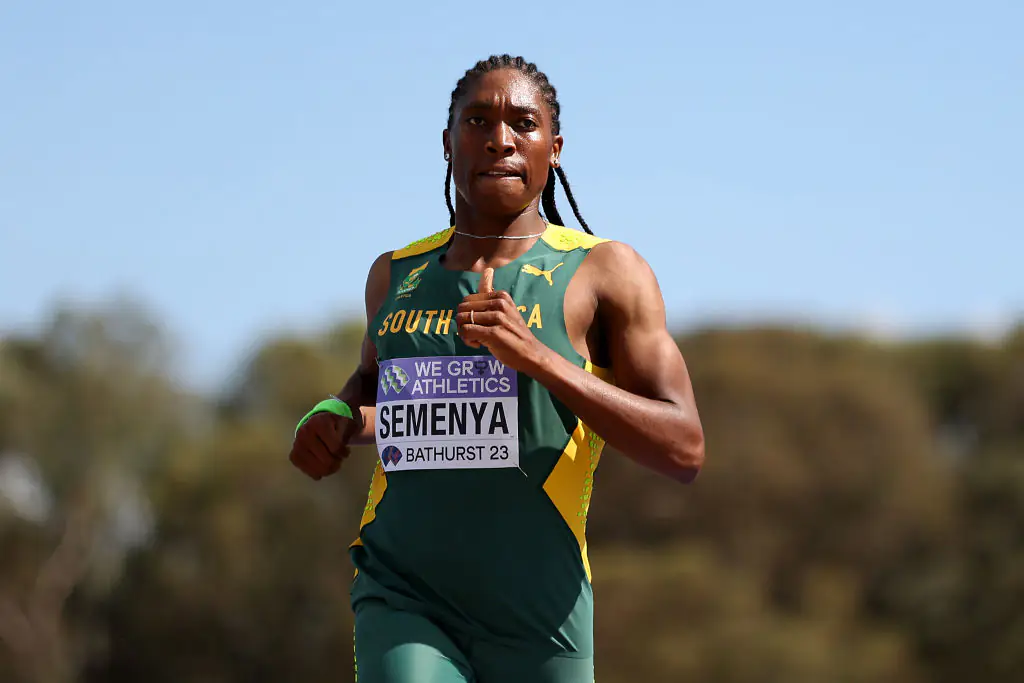
The restriction will also apply to athletes with differences in sex development, including competitors like Caster Semenya, as part of a broader tightening of eligibility rules.
IOC president Kirsty Coventry said the policy had been a priority before Trump returned to office. She stated via Sky Sports: "The policy was a priority for me way before President Trump came into his second term, so there has not been any pressure from us to deliver anything from anybody outside the Olympic movement."
She added that the IOC worked with more than 1,000 athletes while developing the framework and emphasized the importance of safeguarding and support systems during implementation.
The decision marks a shift from the IOC’s earlier stance, where individual sports were responsible for setting their own rules. Coventry began pushing for a unified policy after taking over leadership in 2025.
Pressure had been building from multiple sides, including political influence from the United States ahead of the Los Angeles Olympics.
The new policy will take effect in July 2028, with the IOC now working alongside international federations and national Olympic committees to finalize how the rules will be implemented.