ADVERT
US3 min(s) read
A naked man who launched himself 278 feet from the Brooklyn Bridge on Sunday, August 2, remarkably survived the should-have-been-fatal fall. The man, identified as Galymzhan Abaildayev, 44, is somehow in a stable condition despite all odds.
Dr. David S. Shapiro, a trauma surgeon of over 30 years, told The New York Post: “Jumping or falling from extreme heights – such as a 270-foot bridge tower – is overwhelmingly fatal.
“It generates extreme kinetic energy that causes widespread, life-threatening trauma.”
Revealing how Abaildayev’s miraculous survival could have been possible, Dr Shapiro, who now works at New England Donor Services, explained that it could have been for a number of physics-defying reasons.
Firstly, the bag that can be seen held above the jumper’s head could have worked as a “makeshift parachute”, reducing the speed he plummeted at, likely between 79-87 mph, just enough to prevent his injuries becoming fatal.
Although there is no evidence of it, another way his life could have been saved is if an object fell into the water moments before Abaildayev did, breaking and softening the surface, reducing the impact of his landing.
However, Dr Shapiro notes that what most likely saved the reckless daredevil was the position he entered the East River in. The expert explained: “If you slap your hand on the water palm down, it makes a big splash … if you hit it vertically like a karate chop you’ll see it slice through the water. The position your body is in when it enters the water makes a big difference.”
Referencing how cliff-divers survive jumping from massive heights, he said: “They don’t head-first dive. If you lock your body in, perfectly straight vertically, you’ll go through the water a lot easier.”
Describing typical injuries sustained upon impact after falling, Shapiro said trauma centers refer to injuries suffered by people who fall from a height as “deceleration” injuries. This is because their body is thrown at a surface and rapidly goes from a high speed to 0 mph.
He added: “I’d expect things like internal injuries – particularly what we call lacerations — of the spleen and liver – as well as skeletal, joint or bone injuries. If you land on your feet, your heel bone, one of the highest-impact bones in your body, it can cause a complex ankle fracture on both sides.
“’Vertical injuries'– where someone lands directly on their feet or head – can cause a variety of trauma, including burst fractures of the spine and at the base of the skull, injuring both the brain and spinal cord.
“People in this setting can die from the impact, drowning, and injuries that may not seem immediately lethal but result in significant bleeding, brain trauma, and other injuries that together are enough to cause death in most.”
While Abaildayev was quickly rescued and rushed to Bellevue Hospital in a stable condition, he could still succumb to his injuries. He has also been charged with reckless endangerment, making graffiti, public lewdness, criminal trespass, and disorderly conduct, police announced Monday.
weird3 min(s) read
us2 min(s) read
world4 min(s) read
weird2 min(s) read
world2 min(s) read
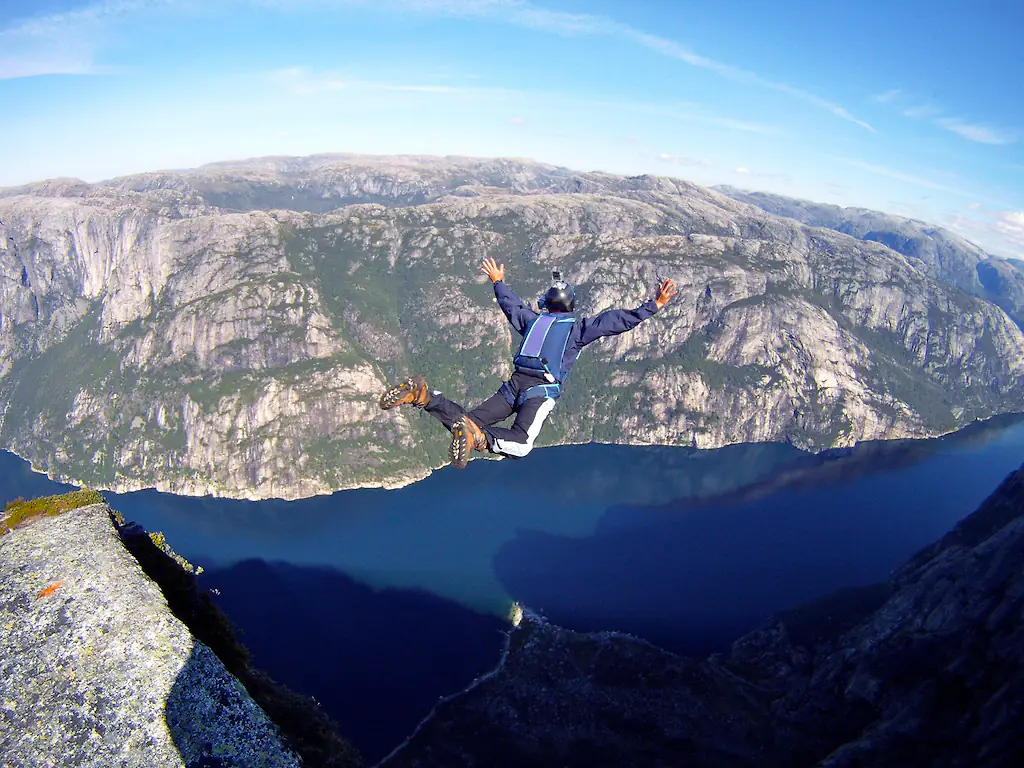
A base jumper can consider himself very lucky after his parachute didn't open after he jumped from a 120-meter tower - and lived to tell the tale!
Some people - naturally - have a fear of heights meaning that even standing on top of a tall structure can cause dizzying effects and the need to cry.
However, others will defy all fears and force themselves up the tallest points they can find, just to jump off them as they chase an adrenaline rush.
But this video might make some adrenaline junkies think twice after it shows a Russian man jumping from a 120-meter tower and his parachute failing to open.
As he stands atop the great height, it's clear that the young daredevil is feeling anxious about the jump, but he moves towards the edge.
Regardless of the anxiety, he leaps off the tower in Konakova, Russia but his friend is left watching helplessly as he plummets toward the ground with no sign of a parachute.
Miraculously, the man survived the enormous drop as the snow on the ground below appeared to cushion his fall, and according to the Daily Mail, he was up and walking three months later after fracturing his vertebrae, pelvis, and legs.
While his injuries were pretty severe, this base jumper can nonetheless count himself incredibly lucky that things didn't go worse for him and he was able to live to tell the tale of what had happened.
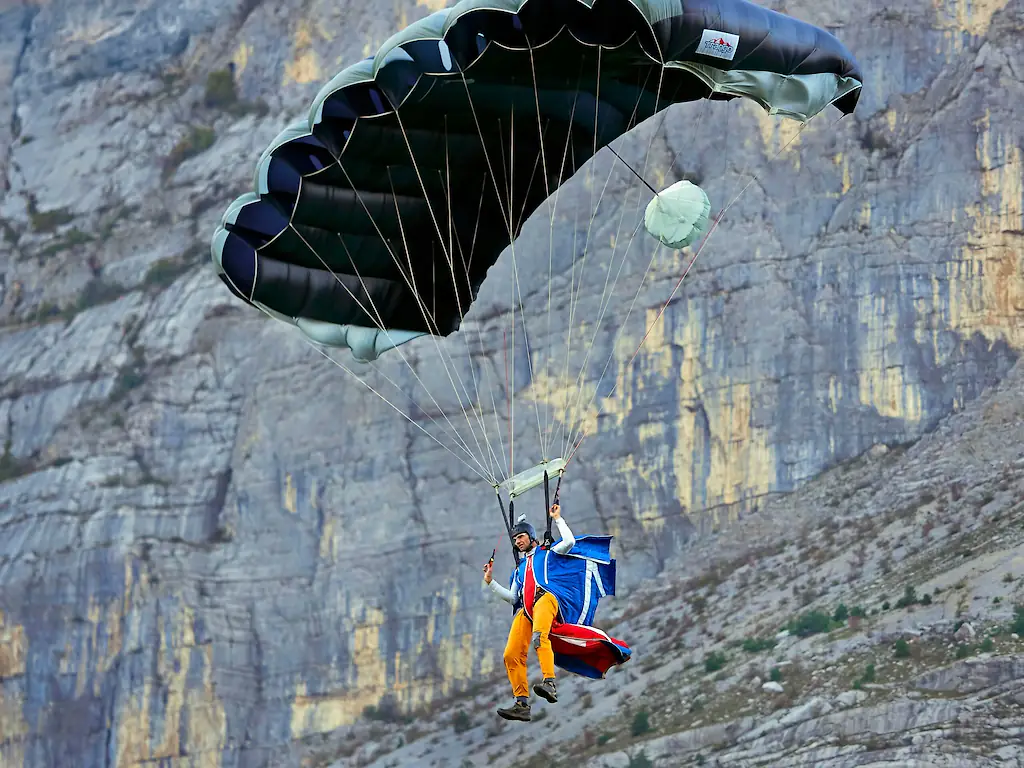
Sadly, not everyone is so lucky. As reported by the Guardian, a British base jumper died after his parachute failed to open when holidaying in the south of France.
The group decided to jump from the Bournillon cliff and into the Bourne gorge. An alarm was raised when eyewitnesses did not see a parachute open, and a search was started for the individual.
He was found unconscious and in cardiorespiratory arrest as two rescuers were winched as close as possible to the man, who was dangling from his parachute on the cliffside.
He was immediately taken to hospital where he, unfortunately, passed away as a result of his injuries.
It goes without saying - when taking part in high-risk activities, make sure that all safety procedures have been adhered to. However, even with the best safety protocols, there is always room for error or something malfunctioning - so base jumping is definitely not an activity to take part in lightly.
Earlier this week, on Tuesday, January 15th, a sergeant with the NYPD went above and beyond the call of duty when he saved a teenage boy on Manhattan Bridge.
Sgt. William Hart was passing by the Brooklyn end of the pedestrian walkway by chance that evening when he was flagged down by a group of people who had seen a child perched dangerously on the edge of the bridge. The 13-year-old boy, who has not been named, had climbed over the six-foot chain link fencing and was preparing himself to jump.
For most people, this would have been an incredibly daunting responsibility to take on. With more than 20 years of experience, however, Hart was ready for the task.
"I tried to engage him in conversation, and he didn’t really pay any attention to me," the sergeant said.
"He was very distraught. He was on the edge looking down. He was still over Brooklyn; he wasn’t over the water. He was looking straight down. It had to be maybe close to 100 feet."
Fortunately for the teen, Hart had a lot of experience with these sorts of situations, as he'd worked with the Emergency Services Unit of the police department for a decade. Instead of panicking, he remained calm, and approached the boy cautiously so as not to cause him to do anything abrupt.
"Between him and I was a 6-foot metal fence. I tried to engage him in conversation, and he didn’t really pay any attention to me," he said. "So I hopped up over the fence and he still didn’t really recognise I was there … I kind of took it in stages. He didn’t respond to my voice on the side of the fence. He didn’t respond to me as I was on top of the fence. So at that point, I decided I had to grab him, or else he was gonna go."
Once he had got a hold of the kid, "he became very compliant," Hart recalled. "He didn’t fight. He was starting to shiver."
Shortly after that, more police officers arrived, and the teenager was taken to hospital.
He reportedly stated that he had been trying to kill himself for two days, so Hart really did get to him in the nick of time. "My experience, it looked like he was going to jump," the sergeant said.
Hart continued: "I’m grateful for the opportunity to be able to help him, because I just happened to be there. Who knows how long he would have sat there. I mean, it was cold. He was very upset. Had he jumped, it probably would have been fatal based on the height."
If it were not for the sergeant, then, this could have turned out to be a very different news story. In fact, the 13-year-old was the sixth person that Hart has saved from jumping to their death in his years with the NYPD, so his influence alone has had a massive impact.
If you have been affected by any of the issues in this article, contact Your Life Your Voice on 1 800 448 3000, Samaritans on 116 123 or the National Suicide Prevention Hotline on 1 800 273 8255. For recorded information, call Mind on 0300 123 3393
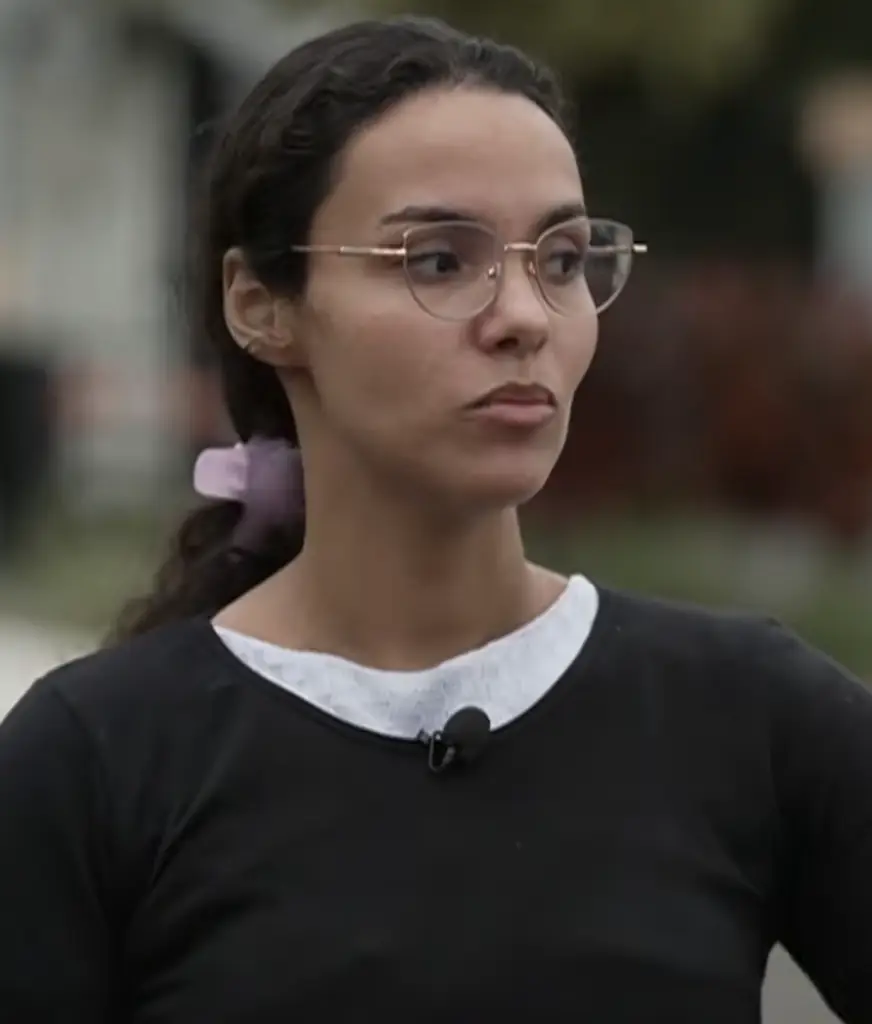
A young Brazilian woman who was thrown to her death after bungee jump staff allegedly failed to attach a safety rope was still alive in the moments after her fall, according to an off-duty nurse who rushed to help her.
Maria Eduarda Rodrigues de Freitas, 21, died on Saturday after plunging from the abandoned 130-foot Skeleton Bridge in Limeira, in São Paulo state, local authorities said.
The aspiring physical education teacher had reportedly requested to be launched "airplane style," with two instructors lifting her above their shoulders while she stretched out her arms. Viral footage circulating online appears to show the moments before the fatal jump.
Authorities have since charged three men with homicide with eventual intent, a Brazilian legal classification used when a person does not intend to kill but acts with such recklessness that a death occurs.
Shockingly, Rodrigues de Freitas did not die instantly after falling more than 100 feet to the ground, according to nurse Rayza Dias, who attempted to save her.
Dias described the difficult journey to reach the injured 21-year-old.
"I scraped my whole hand because there's a steep slope down there and only one rope for us to climb down," Dias told news show Domingo Espetacular on Sunday. "It was all covered in mud. I kept going down, down, we walked all the way."
The nurse said Rodrigues de Freitas was still breathing heavily and had a weak pulse when she arrived and began providing emergency care.
Becoming emotional during the interview, Dias recalled speaking directly to the victim.
"I even talked to her. I have a habit of joking and saying, "Nobody dies on my shift." And I told her, "Duda, nobody dies on my shift." Even though I wasn't on my shift there."
"Duda" is a common nickname in Portuguese for women named Eduarda.
Brazil's military police told local media that two men fled the scene shortly after realizing the fatal error.
They were later located in a nearby wooded area by a police helicopter, while six people in total were taken in for questioning, according to the São Paulo Public Security Secretariat.
Three men were subsequently charged with homicide with eventual intent. Local reports identified them as Maicon Fernandes Cintra, 42, Luis Felipe Feliciano Egoroff, 32, and Vitor de Freitas Goncalves, 27.
According to investigators, the suspects claimed there was a "blackout" during preparations for the jump and said they "can't remember" when or how the rope was not attached, or who was responsible for securing it.
No company has publicly accepted responsibility for the incident, and reports suggest the men may have been operating as an unauthorized group.
The tragedy has also renewed scrutiny of safety concerns surrounding Skeleton Bridge, where another fatal accident occurred in 2024 when a cyclist reportedly lost control and fell to her death.
Because the bridge is abandoned, responsibility for access, maintenance and management falls to Brazil's federal government.
Following the cyclist's death, federal authorities ordered Limeira municipality to block access and install warning signs. While the city complied, access points were later bypassed and adventure sports operators reportedly lobbied to keep the bridge open for commercial activities.
After Rodrigues de Freitas's death, Limeira City Hall reiterated that the federal government was responsible for regulating the bridge and said it had repeatedly warned officials about the dangers posed by the site.
The city has also announced plans to take legal action against the federal government.
Mayor Murilo Felix said: "In addition to the circumstances that led to the young woman's death, it is necessary to establish who is responsible for the lack of access control to a federal area which, for years, has posed known risks and is still without the necessary safety measures.
"We have been calling for action for months to ensure that the Federal Government assumes its responsibility. Unfortunately, its failure to act has just resulted in yet another tragedy in Limeira."
Adding to the grim circumstances, Rodrigues de Freitas reportedly shared an image on Instagram shortly before the jump showing a warning sign featuring a skull and crossbones and the words: "Danger. Risk of death."
She was buried in São Paulo on Sunday.
Hours after the funeral, her mother shared an emotional tribute on social media, writing: "That damned rope took you away from me forever.
"My beloved daughter, you are gone, and all that remains here is pain and longing. I will love you forever."
A man performed an incredible act of heroism by jumping from a bridge to save a child who fell out of a car.
Per a press release shared by the Ocean City Fire Department in Maryland, the collision occurred at approximately 2:45PM on Sunday, May 2, when several vehicles smashed into one another while driving down the Route 90 bridge.
A 23-month-year-old child fell from one car left dangling halfway over the bridge's guardrail and dropped 25 feet down into the waters of Assawoman Bay below the crossing point.
However, a heroic man, who has not yet been identified, and whose vehicle had also been involved in the crash, spotted that the child was in distress, lying face down in the water.
He immediately leaped into action, jumping down to an area of water only five-foot deep to save the little girl and pull her out of harm's way before further tragedy.
Commenting on the bystander's bravery in a later interview with CNN, medic and firefighter Ryan Whittington stated:
"He just jumped into action. He saved a 23-month-old child.
"There’s no doubt in our mind that if he had not [done] what he did when he did it that we would be having a different headline to this story.
"For as much tragedy that you see there, the outcome has really been a successful one. It was a very fortunate day for a lot of people who experienced traumatic injury."
Meanwhile, senior deputy fire marshal Bob Korb told the publication: "The real hero in this situation is the good Samaritan that jumped in to provide life-saving measures for the infant. I’d like to shake his hand or buy him a beer or both someday."
Following her dramatic rescue from the water, the little girl was flown to John Hopkins Children’s Hospital to receive treatment for injuries sustained during the incident.
A total of eight other people were also left hospitalized as a result of the traffic accident, although CNN reports that all of the injured have since been discharged.
An avid skydiver has passed away after a tragic accident midair.
According to 7News, Mark Hanna had over 300 jumps under his belt when he tried jumping with a wingsuit for the first time.
However, when both of his parachutes failed to deploy, the 34-year-old tragically plunged to his death in Connewarre, Australia.
Melbourne native Hanna was taking a new flying course over Torquay as part of a 12-strong group when the fatal incident occurred on Sunday (July 10).
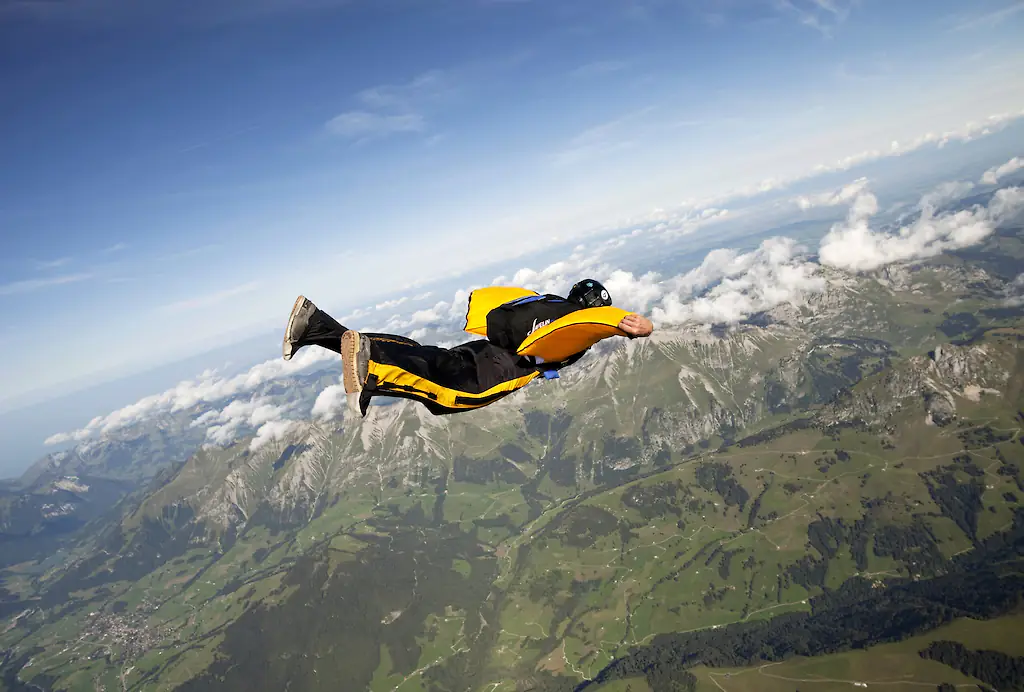
Despite being an experienced skydiver, the jump was Hanna's first time using a wingsuit - a kind of jumpsuit with extra webbing that allows the faller to glide through the air for a longer period of time.
Although he was jumping alongside an experienced instructor, something went wrong during the freefall and both Hanna's primary and backup parachutes failed to deploy. He landed in Connewarre, where he was declared dead at the scene. His coach, meanwhile, was able to make a safe landing nearby.
Australian Parachute Federation CEO Richard McCooey explained that the precise circumstances leading up to the tragic death were still being investigated.
"We understand that the man had successfully completed 300 jumps and was doing his first jump in a wingsuit, under the supervision of an experienced tutor," he told the Herald Sun, adding: "We know very little beyond that at this stage."
"This is an awful situation and our thoughts are with the man’s family and friends," McCooey added.
Tributes have poured in for Hanna, with devastated loved ones describing him as a "daredevil" and remembering his mischievous spirit.
His close friend Dave told 7News: "He was the biggest daredevil you’d ever meet, but ... he was the most humble and nicest guy as well with the best smile."
"He’ll be missed by everyone, especially our inner tighter knight community but in particular his twin brother," Dave added.
Meanwhile, Hanna's twin Andrew described the irreplaceable bond he shared with his brother. "The bond that we had being twins growing up, all the mischief that we got up to, we knew that we could always count on each other no matter what," he recalled.