ADVERT
Weird3 min(s) read
Published 16:18 03 Aug 2026 GMT
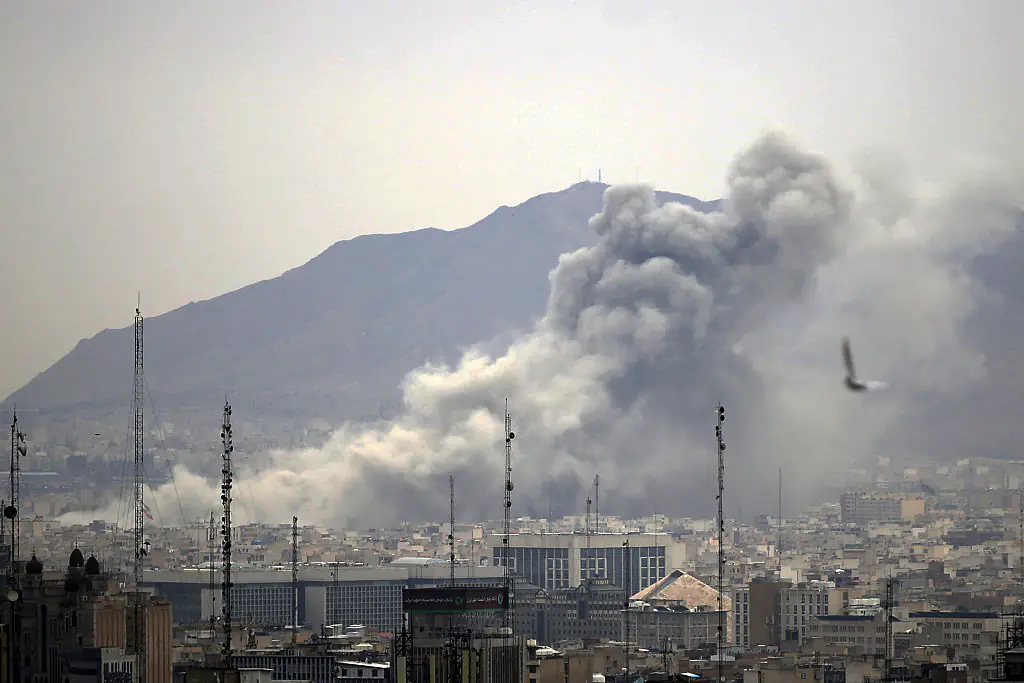
A man dubbed the "Chinese Nostradamus" has sparked fresh debate after issuing a terrifying warning that an ongoing geopolitical conflict could "forever change the global order."
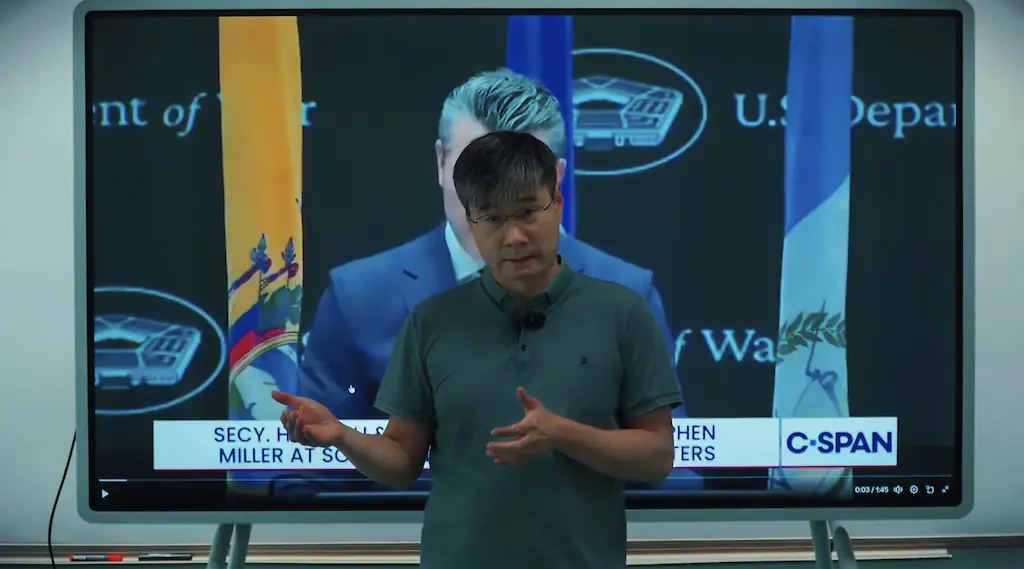
Chinese-Canadian educator and YouTuber Jiang Xueqin, who runs the popular Predictive History channel, has gained 2.7 million followers for making bold forecasts based on historical patterns and geopolitical analysis rather than claiming supernatural powers. His latest prediction has gone viral after real-world events mimicked several of his earlier predictions.
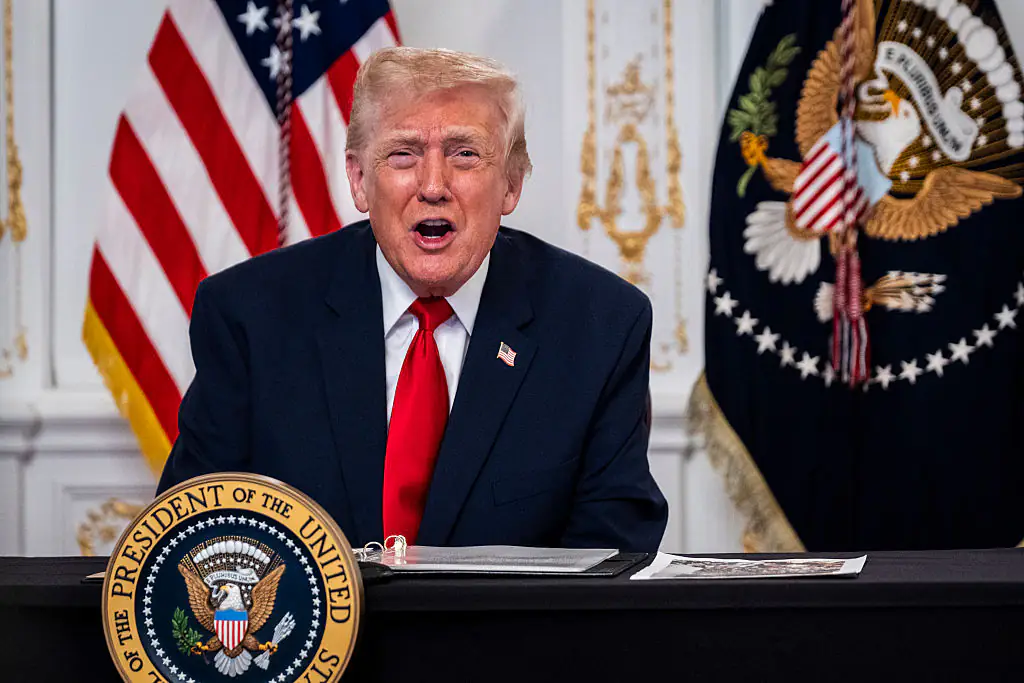
Xueqin first rose to fame after predicting that Donald Trump would return to the White House following the 2024 U.S. presidential election.
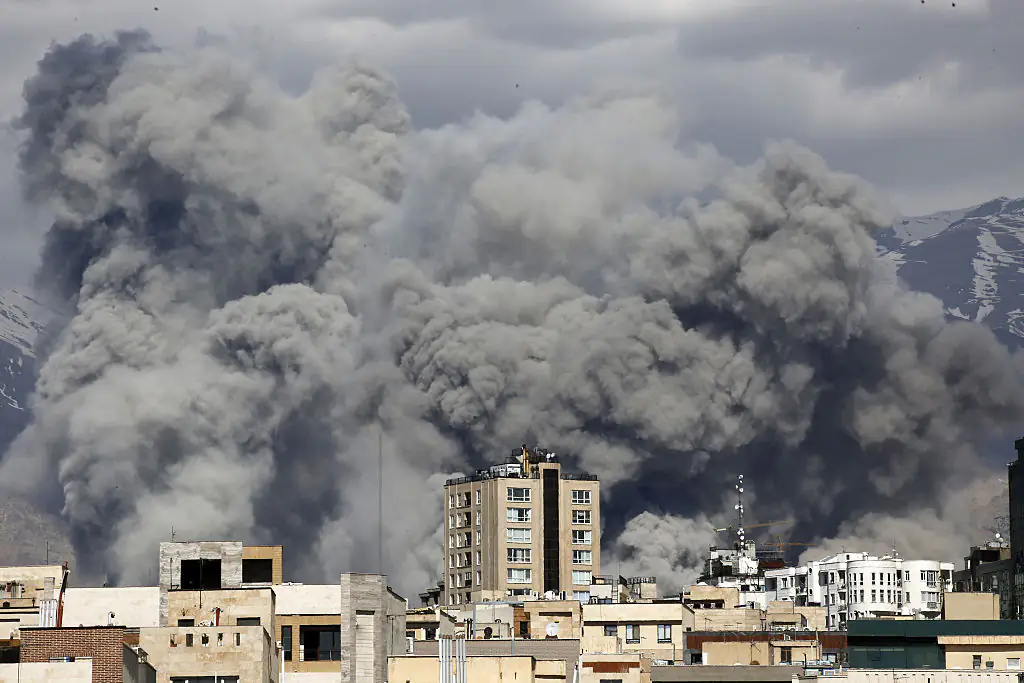
He also argued that a second Trump presidency would significantly increase the likelihood of the United States becoming involved in a military conflict with Iran, which, although not perhaps groundbreaking, has certainly rung true.
Now, Xueqin believes the current conflict could have far-reaching consequences.
According to his analysis, the United States will ultimately fail to come out of the war with Iran victorious, and the outcome will fundamentally alter the balance of global power.
He has argued that a US defeat would "forever change the global order," and the conflict could mark a turning point in international politics and America's long-held position as the world's dominant superpower.
Xueqin argues that Iran possesses strategic advantages and so there is “no way the US can win this war”. He describes the war as one of attrition, claiming Iran has spent decades preparing for such a confrontation.
In the video, he said: "Given my analysis of how the war is progressing, I think that Iran has many more advantages over the United States.
"The reality is, right now, it's a war of attrition between the United States and Iran, and Iranians have been preparing 20 years for this conflict."

Drawing on history, he compared the situation to Athens' disastrous invasion of Sicily during the Peloponnesian War between 415 and 413 BC.
In his view, the ancient battle serves as proof that a powerful nation can be brutally beaten when invading hostile territory without a solid strategic plan and clear path to victory.
His comments come amid heightened concerns over the wider economic consequences of instability in the Middle East.
Disruptions to key shipping routes, including the Strait of Hormuz, have contributed to higher fuel costs and broader economic pressures, adding to fears that the conflict could have worldwide repercussions and eventually the US will have to back down.
us3 min(s) read
us4 min(s) read
Published 14:52 15 Apr 2026 GMT
world2 min(s) read
us3 min(s) read
Published 16:31 30 Mar 2026 GMT
A Beijing-based academic dubbed the “Chinese Nostradamus” has outlined a stark vision of the coming years, and recent developments involving Donald Trump and Iran are making his warnings feel increasingly relevant.
Jiang Xueqin has built a reputation for forecasting global events using a mix of historical patterns and game theory.
He previously predicted Trump’s 2024 election win and warned that if he returned to power, there “will be a very strong likelihood that the United States will go to war with Iran”, both of which have since come to pass.
Now, Jiang has laid out a broader and more alarming scenario for the next “two to four years,” culminating in what he describes as a major shift in global power, including “the destruction of Europe.”
In a recent lecture, he suggested the US could be forced to send ground troops into Iran to maintain control, which he believes would spark serious unrest back home.
“A lot of young people are going to refuse to fight in this war. And this is going to create protest,” he said.
“Then America will have no choice but to deploy the National Guard. And this will create the recipe for a lot of civil conflict in America.”
According to Jiang, the consequences would stretch far beyond the US and have a broader impact.
He argues that the Gulf Cooperation Council (GCC), a bloc including Saudi Arabia and other US-aligned nations, could collapse under the strain of the conflict.
“What’s happening in this war is that the economies of the GCC are being destroyed and that’s part of the plan,” he claimed.
He also pointed to ideological influences within parts of the US government, particularly among Evangelical Christians, suggesting that beliefs about the end of the world, or eschatology, could shape decision-making.
This, he argues, could draw more countries into the conflict.
“The third thing we can expect is that Turkey and Saudi Arabia will enter the war… because you want to use this war to weaken opposition to these eschatologies,” he said.
Jiang warned that this chain reaction could devastate Western alliances, even predicting: “We can expect the destruction of Europe, the end of NATO basically.”
Tensions in the Middle East could also escalate around key religious flashpoints, including Al-Aqsa Mosque in Jerusalem, a location long at the centre of the ongoing war between Israelis and Palestinians.
Looking further ahead, Jiang suggested the war could reshape global economics and power structures.
As the US becomes entangled in Iran, he believes countries like Russia could take advantage, with Vladimir Putin potentially strengthening his position in Ukraine.
Meanwhile, major corporations could shift their focus elsewhere.
“Think of companies like Nvidia, Oracle, Microsoft, Google. They’ll probably transfer themselves to Israel because that is where the power will rest,” Jiang said.
Even a US withdrawal, he argues, would come at a cost.
Iran could demand compensation from Gulf nations for wartime damage, using its control over key oil routes to enforce it.
“So all this money from the GCC, before it's going to United States to fuel the US economy… it goes to Iran,” he explained.
That, in turn, could weaken the American economy while strengthening Iran’s global standing.
Jiang believes this could allow the country to rebuild rapidly and emerge as a dominant regional power “in five to 10 years.”
Ultimately, he suggests Trump could face a no-win decision: escalate the conflict with a costly ground war or pull back and risk economic fallout at home.
With both sides influenced by strong ideological forces, Jiang warns that diplomacy may be difficult, and if his predictions are correct, the latter half of the 2020s could prove to be an especially volatile period worldwide.
A man dubbed “China’s Nostradamus” has issued a chilling new warning about the escalating war between the United States and Iran, as tensions in the Middle East continue to rise.
Professor Xueqin Jiang, a Chinese-Canadian tutor who runs the popular YouTube channel Predictive History, has gained attention online after several of his past predictions appeared to come true.
In a viral video from May 2024, he predicted that Donald Trump would return to power and that a war with Iran would follow. He also warned that the United States would ultimately lose the conflict, “forever changing the global order.”
Now, as the situation unfolds, Jiang has shared new claims about what could come next following last week’s agreement to a temporary ceasefire.
Despite guarantees of “safe passage” through the Strait of Hormuz, the situation remains fragile, with ship traffic through the pivotal oil route having slowed considerably, with reports that vessels could be “targeted and destroyed” if they attempt to pass without Iran’s approval.
Notwithstanding the agreement, only a limited number of ships have been able to pass through the strait, raising concerns about ongoing disruption to global oil supplies.
In a video titled Trump World Order, Jiang warned that the conflict may only be getting worse. He said: “So remember, this war in Iran, it's not ending. In fact, many people believe it's only starting to ramp up.”
He also pointed to speculation about a potential ground invasion, adding: “There are rumors that Donald Trump has already authorized the use of ground forces and so we could see an invasion of Iran as early as this weekend, but certainly, definitely this month.”
Jiang highlighted the challenges such an invasion would face, noting: “Right now America has only about 50,000 troops in the Middle East and the geography, the terrain, makes it very hard to control.”
Explaining the difficulties of a ground assault, Jiang pointed to Iran’s landscape, including the Zagros Mountains and vast deserts, which could make military operations extremely difficult.
He said: “So, you have these mountains… which allows for the Iranians to hide and conduct guerrilla warfare… Then you have the deserts… which makes it very hard to cross.”
He added that no matter which direction US forces approached from, they would face significant obstacles: “If they were to attack from Iraq, they would have to face the mountains… from Pakistan… they would have to face deserts… and from the south… you're far away from Tehran.”
Jiang also suggested that current US actions point toward a prolonged war. He said: “Right now, the consensus seems to be that the Americans first want to control the Strait of Hormuz in order to elevate the strain on the global economy.”
He continued: “Already we're seeing lots of signs that America is preparing for a long, long war.”
Referencing reports about military readiness, he added: “So not only have they sent 50,000 troops to the Middle East, but they're preparing to call the reserves as well. So this seems as though America is preparing for total war.”
Jiang reiterated his earlier prediction that the US would lose if it launched a full-scale invasion of Iran. He said: “America would lose this war because a ground invasion would fail and the Iranians are fully prepared for a ground invasion.”
According to him, the consequences could be dramatic. He warned the “American empire would die,” adding that the US could lose its dominance in global finance and that “the global economy would collapse.”
However, Jiang also presented a more controversial idea, that such an outcome could be intentional.
He said: “What if for some strange reason, Donald Trump wants to lose his war in Iran? What if he wants the American empire to collapse?”
He argued that even a failed war could shift global dependence toward North America’s resources, explaining: “If the Strait of Hormuz is closed… the world is now much more dependent on North America and Russia for oil.”
Summing up his theory, he added: “So in other words, the United States starts a stupid war… It can't possibly win, but it still benefits.”
As tensions remain high and the ceasefire hangs in the balance, Jiang’s predictions have added to growing fears about what the future of the conflict, and the global economy, could hold.
Published 11:30 13 Apr 2026 GMT
A podcast conversation has sparked heated discussion after Professor Xueqin Jiang, dubbed by some as the “Chinese Nostradamus,” shared a prediction about how the US could staff a potential war with Iran.
Speaking with 24-year-old content creator Jack Neel, the pair explored whether younger Americans would be willing to fight and what might happen if they refused.
The discussion, featured on Neel's podcast, focused heavily on the realities of modern warfare and recruitment. Jiang raised doubts early on, pointing out that “it's very hard to create an event that rallies Gen Z,” especially when it comes to a conflict overseas.
Jiang also stated that war still requires large numbers of ground troops despite advances in drone technology, describing it as “the economics of war” where nations look for the most efficient way to win.
A major theme of the conversation was the difficulty of convincing younger Americans to enlist. Jiang questioned whether people Neel's age would realistically agree to fight, suggesting the idea of them being sent to “a desert, a mountain fortress” to die “sounds a bit absurd.”
He went even further, claiming that many Gen Z youngsters would “rather go to prison than go to Iran,” highlighting what he sees as a major barrier to any traditional draft effort.
Jiang spoke about the likelihood of a draft being attempted anyway, noting that you could “organize a national draft and then have so much political fervor,” even if public resistance remained high.
The conversation then moved into more controversial territory as Jiang outlined what could happen if a draft failed to gain support. He suggested authorities could pivot, saying: “fine, let's show compromise. Let's have the illegal immigrants do this.”
He described a scenario where individuals are given a stark choice: “You can either go back to Latin America or you can go to Iran and win citizenship for your family,” adding that this would apply not just to individuals but also “your immediate family, your children, your parents, your wife.”
Jiang acknowledged the uncomfortable nature of the idea but agreed it could appeal to some, adding “for a lot of illegal immigrants, this is actually a pretty attractive offer.”
The prediction did not stop there. Jiang continued by suggesting escalating measures, saying: “If I had to guess, I think they will try false flags, and I think they will have an actual draft, and I think this will not work out.” He added that in such a scenario, leaders could “get desperate” and “start to recruit illegal immigrants to fight this war."
While Jiang did not present this as a certainty, the discussion paints a speculative path where traditional recruitment fails and more extreme measures are considered.
The claims have since stirred strong reactions online, with many questioning both the ethics and realism of the scenario laid out in the discussion.
Published 14:52 17 Mar 2026 GMT
A psychic dubbed the "New Nostradamus" has made a haunting new prediction about Donald Trump’s future in office.
Craig Hamilton-Parker, a British psychic, has built a following by claiming to predict global events, from Brexit and the Covid-19 pandemic to Trump’s 2016 election victory and even recent developments in Iran.
The self-proclaimed "Prophet of Doom" runs a popular YouTube channel and studies spiritual practices, including Nadi Astrology, alongside his wife Jane.
Hamilton-Parker recently claimed that Trump could serve a third term as US president, despite constitutional rules that would normally make that impossible.
He said that the war in Iran and other world events could open the door to unexpected political outcomes.
"To reiterate what I said at the time, I felt there would be some big global conflict, possibly involving Taiwan," he said, per The Mirror.
"Looking at it now, it could be any global conflict. I know a lot of people have criticised this, saying you cannot have a third term because it is written in the Constitution-but who knows? Things have changed so much in the world," he added.
His prediction directly contradicts the 22nd Amendment, which states: "No person shall be elected to the office of the President more than twice, and no person who has held the office of President, or acted as President, for more than two years of a term to which some other person was elected President shall be elected to the office of the President more than once."
The 79-year-old himself has previously hinted at the idea, saying there are "methods which you could do it".
The prediction comes as tensions in the Middle East continue to escalate, with the president issuing stark warnings about the future of NATO amid ongoing conflict involving Iran.
"It’s only appropriate that people who are the beneficiaries of the Strait will help to make sure that nothing bad happens there," Trump said. He added: "If there’s no response or if it’s a negative response, I think it will be very bad for the future of NATO."
The president has encouraged allies and major world powers to help secure the Strait of Hormuz, a key oil route.
"I think China should help too because China gets 90 percent of its oil from the Straits [sic]," he said.
He also suggested further military action remains an option. "You saw we hit Kharg Island, everything but the pipes yesterday," he said. "We can hit that in five minutes. And there’s not a thing they can do about it."
Hamilton-Parker has said that the rapid changes on the global stage have made once-unthinkable scenarios seem increasingly within reach.
"Who would have imagined the possibility of invading Greenland, or kidnapping a country's leader, as has happened in Venezuela? The world is changing rapidly," he said.
He also cautioned that emergency powers could come into play: "Something will occur that overturns the existing rules, and that period will be a time of great conflict."