ADVERT
Health3 min(s) read
Published 12:39 22 Jul 2026 GMT
Here are three of the most unsettling facts about the Euthanasia Coaster that 'kills anyone who rides it.
Back in 2010, Lithuanian designer and artist Julijonas Urbonas introduced a rollercoaster that was described as a "hypothetic death machine in the form of a roller coaster, engineered to humanely, with elegance and euphoria, take the life of a human being".
While the ride was never built, the disturbing concept continues to capture attention.
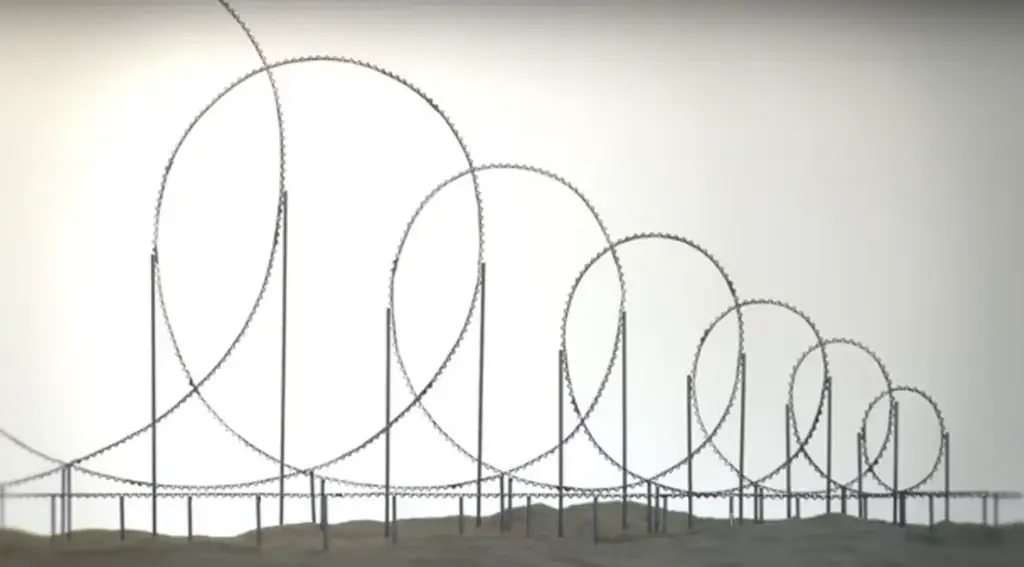
The Euthanasia Coaster sends passengers through a series of increasingly smaller loops that keep them under a constant force of 10Gs, per Interesting Engineering.
This causes blood to drain away from the brain, which would then lead to cerebral hypoxia, which is a lack of oxygen to the brain.
On regular roller coasters, changing G-forces can sometimes cause tunnel vision, dizziness, or brief blackouts, but the forces only last a few seconds and are controlled.
The Euthanasia Coaster is meant to keep riders under these extreme forces for much longer, causing them to lose consciousness before eventually passing away.
A TikTok simulation by @ridesnslides showed how the theoretical ride would operate.
According to the simulation, passengers would slowly climb 510 feet into the air before being offered one final opportunity to back out. Those wishing to continue would each press a button to begin the descent.
Explaining the ride's effects, the creator said: "You would gradually begin experiencing worsening cases of cerebral hypoxia, meaning your blood would rush to the lower parts of your body, and so your brain wouldn't be getting enough oxygen to survive."
"The first thing that you would notice is your vision greying out, which would then gradually turn to tunnel vision. From there, you would begin experiencing a blackout, and ultimately, you would eventually lose consciousness and die."
The man behind the controversial design isn't just an artist.
Urbonas previously worked as a ride designer at an amusement park in Klaipeda, Lithuania, which he also operated between 2004 and 2007.
He later earned degrees in visual design and design from the Vilnius Academy of Arts before completing a Ph.D. in Design Interactions at the Royal College of Art in London, where the Euthanasia Coaster began life as a theoretical project.
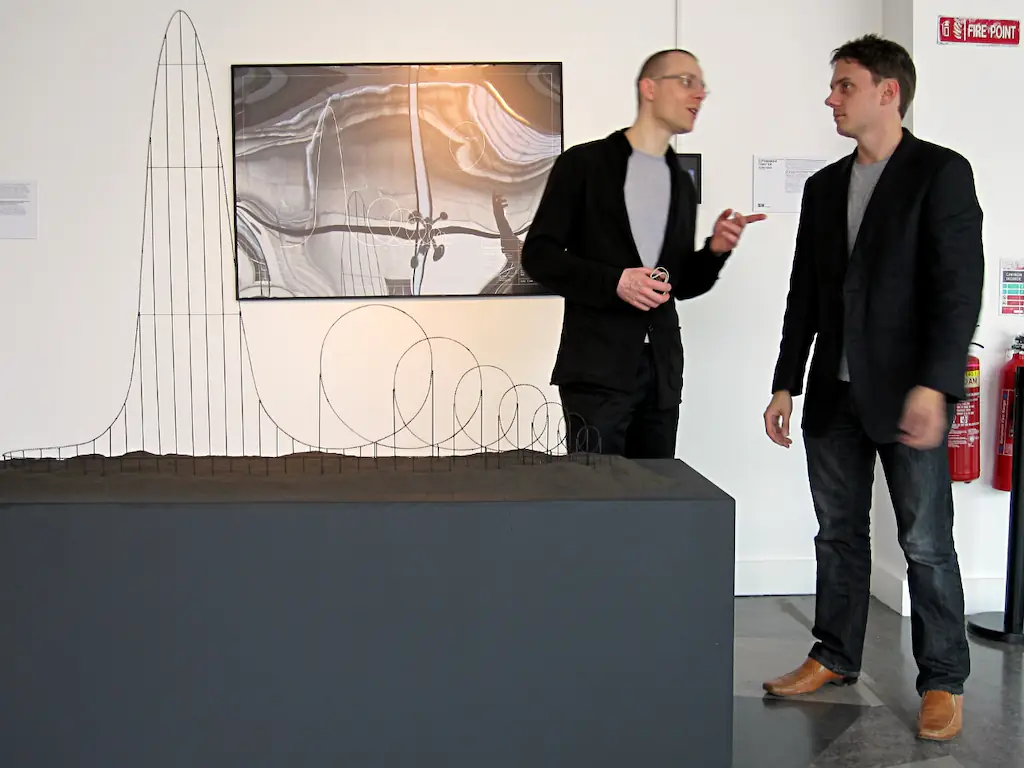
A scale model of the ride was unveiled in 2011 at Dublin's Science Gallery as part of the HUMAN+ exhibition before later winning the Public Prize of New Technological Art at Update 2013.
Urbonas has said his time designing amusement rides helped him develop what he calls "gravitational aesthetics," an approach to art and design that explores manipulating "bodily perceptions of gravity" to push both physical sensation and imagination to their limits.
While the ride was originally presented as a theoretical euthanasia device, Urbonas has also suggested it could be used as a method of execution.
The creator said he would even turn the experience into a "spectacle" for the families of those choosing euthanasia or for victims of criminals sentenced to capital punishment.
weird3 min(s) read
health2 min(s) read
Published 13:53 15 Oct 2024 GMT
weird3 min(s) read
Published 13:05 16 Jul 2026 GMT
relationships2 min(s) read
Published 15:58 16 Jul 2026 GMT
A controversial concept for a rollercoaster designed to end its riders' lives has sparked debate, but one leading neuroscientist believes the experience would be far less pleasant than its creator suggests.
The so-called Euthanasia Rollercoaster was conceived by Lithuanian artist and designer Julijonas Urbonas, who envisioned a ride capable of killing passengers by exposing them to sustained, extreme gravitational forces.
According to Urbonas, the ride would accelerate to around 100 metres per second, subjecting riders to 10G while sending them through seven consecutive loops.
Explaining the idea behind the concept, Urbonas said: "Usually pilots experience such extreme forces for just a few seconds, but riders in the rollercoaster experience it for one minute and nobody has experienced this for such a long time."
He claimed the prolonged G-forces would deprive the brain of oxygen by forcing blood towards the lower body.
"Your blood is rushed to your lower extremities so there is a lack of blood in your brain, so your brain starts to suffocate," he explained. "When your brain starts to suffocate, people become euphoric."
However, not everyone agrees with that assessment.
Writing for the Design and Violence blog, neuroscientist Antonio Damasio, professor of neuroscience and director of the Brain and Creativity Institute at the University of Southern California, argued the proposed experience would likely be far more unpleasant than euphoric.
"Unfortunately, the likelihood of any pleasure and euphoria being produced is low; nausea and discomfort would be more probable," Damasio wrote.
On Urbonas' website, the project is described as a conceptual "kinetic sculpture" designed to explore the limits of the human body rather than simply function as an amusement ride.
The description states: "The rider is subjected to a series of intensive motion elements that induce various unique experiences: from euphoria to thrill, and from tunnel vision to loss of consciousness, and, eventually, death."
It continues: "Thanks to the marriage of the advanced cross-disciplinary research in aeronautics/space medicine, mechanical engineering, material technologies and, of course, gravity, the fatal journey is made pleasing, elegant and meaningful."
The concept concludes by describing itself as: "Celebrating the limits of the human body, this 'kinetic sculpture' is in fact the ultimate roller coaster."
Although Urbonas has previously suggested the design could theoretically be used to "control populations," he has repeatedly maintained that the project was created as a piece of speculative art intended to provoke discussion about euthanasia, mortality and technology, rather than as a serious proposal for a functioning ride.
Responding to Damasio's criticism, Urbonas defended the broader artistic message behind the concept rather than the scientific claims.
"(Euthanasia) is executed in an extremely boring fashion, proposing 'humane' voluntary death could be more meaningful, personal, ritualistic," he said.
Published 16:22 27 May 2025 GMT
A terrifying simulation has given viewers a front-seat experience of what it would be like to ride the infamous euthanasia rollercoaster that "kills everyone".
First introduced in 2010 by Lithuanian designer and artist Julijonas Urbonas, the rollercoaster has been described as a "hypothetic death machine in the form of a roller coaster, engineered to humanely, with elegance and euphoria, take the life of a human being".
While it has never been built, a TikTok simulation now offers a terrifyingly realistic look at how such a ride, which reportedly holds 24 passengers, might play out.
A simulation shows what it would be like to ride the euthanasia rollercoaster. Credit: Claudiad / Getty
Shared by user @ridesnslides, the video simulates the ride’s mechanics and visual experience.
The video begins with a slow ascent to a towering 510 feet, just shy of the tallest building in America.
Once at the peak, riders are given a final choice: descend safely or continue. If they choose the latter, each must manually press a button to initiate the ride.
Watch the simulation below:
The inversions are engineered with progressively smaller diameters to maintain a constant force of 10Gs - far beyond what most human bodies can withstand.
For comparison, Formula 1 drivers experience just over 6Gs during sharp turns, and Apollo 16 astronauts encountered 7.19Gs during re-entry.
“You would gradually begin experiencing worsening cases of cerebral hypoxia, meaning your blood would rush to the lower parts of your body, and so your brain wouldn’t be getting enough oxygen to survive,” the user said, cited by Vice.
“The first thing that you would notice is your vision greying out, which would then gradually turn to tunnel vision. From there, you would begin experiencing a blackout, and ultimately, you would eventually lose consciousness and die," they added.
Originally designed as a theoretical project while Urbonas was a PhD candidate at the Royal College of Art in London, a scale model of the rollercoaster was unveiled in 2011 at Dublin’s Science Gallery as part of the HUMAN+ exhibit.
The project went on to win the Public Prize of New Technological Art at Update 2013 and has since become a “unique media phenomenon".
The idea of using engineered devices to aid in euthanasia has gained wider attention in recent years. Another controversial concept is the “Sarco machine,” developed by Dr. Philip Nitschke, founder of the euthanasia advocacy group Exit International.
In an interview with SWI swissinfo.ch given in 2021, Nitschke explained: “It’s a 3-D printed capsule, activated from the inside by the person intending to die," cited by Right to Life.
“The machine can be towed anywhere for the death. The person will get into the capsule and lie down… They will be asked a number of questions, and when they have answered, they may press the button inside the capsule, activating the mechanism in their own time," he said.
“The person will get into the capsule and lie down… They will be asked a number of questions, and when they have answered, they may press the button inside the capsule, activating the mechanism in their own time," he continued.
Describing the actual manner of death, Nitschke said: “The capsule is sitting on a piece of equipment that will flood the interior with nitrogen, rapidly reducing the oxygen level to 1 per cent from 21 per cent in about 30 seconds.
"The person will feel a little disoriented and may feel slightly euphoric before they lose consciousness. Death takes place through hypoxia and hypocapnia, oxygen and carbon dioxide deprivation, respectively”.
The man behind an infamous ‘euthanasia coaster’ that kills all who ride it has revealed the reason that he designed it in the first place.
It’s a fascinating thought experiment - if a little dark - but Julijonas Urbonas explained his reasoning.
Urbonas is certainly an interesting character - he’s an artist-researcher most famous for designing his remarkable euthanasia coaster, a theoretical theme park ride designed to kill anyone who boards it.
This ‘hypothetical death machine’ - as he calls it - was devised when he was studying for an engineering PhD.
He used to work at a theme park, so that clearly impacted his thinking as well.
The premise is simple - the roller coaster gets up to remarkable speeds of over 220 miles per hour, catapulting riders through loops on a 1,600-foot drop to the grave.
The idea is that the G-forces of the speed and loops would reach over 10, which would be enough to cause - Urbonas said - a ‘painless’ death.
It’s never been brought into reality, but plenty of simulations have been run and it certainly captures the public imagination.
But, why did he design it in the first place?
The former Royal College of Art student explained that his novel idea could actually thin out the world’s exploding population.
However, he did add that people would board voluntarily.
There would also be a button that riders would have to press in order to commence the huge 1,600-foot drop at the start.
He described it as a ‘humane’ death, as the loops would cause blood to pool in the lower extremities, decreasing flow to the brain and eventually causing loss of consciousness.
Eventually, the brain would shut down through lack of oxygen.
He added: "In a few words, humour here eases, facilitates the stressful debate, but also proposes the ritual of death could be merrier."
While we’ve never seen the roller coaster in real life, and - to be honest - we might never see it, there are simulations that show what would happen, often from pretty shocking perspectives.
In one simulation, shared by user @ridesnslides, the video shows the ride’s mechanics and visual experience.
The video begins with a slow ascent to just shy of the tallest building in America.
Once at the peak, riders are given a final choice: descend safely or continue. If they choose the latter, each must manually press a button to initiate the ride.
The inversions are engineered with progressively smaller diameters to maintain a constant force of 10Gs - far beyond what most human bodies can withstand.
For comparison, Formula 1 drivers experience just over 6Gs during sharp turns, and Apollo 16 astronauts encountered 7.19Gs during re-entry.
“You would gradually begin experiencing worsening cases of cerebral hypoxia, meaning your blood would rush to the lower parts of your body, and so your brain wouldn’t be getting enough oxygen to survive,” the user said, cited by Vice.
“The first thing that you would notice is your vision greying out, which would then gradually turn to tunnel vision. From there, you would begin experiencing a blackout, and ultimately, you would eventually lose consciousness and die," they added.
Published 20:09 24 Nov 2024 GMT
A bone-chilling simulation illustrates what it's like to ride the euthanasia rollercoaster.
The controversial concept of the "euthanasia rollercoaster" was first proposed in 2010 by Lithuanian artist Julijonas Urbonas.
According to The Mirror, Urbonas created a scale model of the frightening idea as a PhD candidate at the Royal College of Art in London.
It was unveiled in 2011 as part of the HUMAN+ display in Dublin where it became the flagship exhibition at the Science Gallery.
TikToker Luke Davidson explained that the ride holds 24 passengers. "Once they're all on board there's a slow ascent to the top, which is 510ft in the air - that's just a little bit smaller than the tallest building in America," he continued.
"Once they're at the top it gives everyone the decision to stop and go back down safely. After that, everyone has to manually press a button to start the ride," he added.
While the "euthanasia rollercoaster" doesn't exist in reality, a terrifying simulation of this ride has been shared online, allowing viewers to experience it virtually.
The clip, shared by user @ridesnslides on TikTok, shows what a long-hypothesized and literal death contraption would look like.
Watch the clip below:
The ride begins with a 1,640-foot drop, reaching speeds exceeding 220 mph. This is followed by seven increasingly smaller inversion loops, designed to maintain a constant 10G force, ultimately leading to the rider's demise.
“You would gradually begin experiencing worsening cases of cerebral hypoxia, meaning your blood would rush to the lower parts of your body, and so your brain wouldn’t be getting enough oxygen to survive,” the user said, cited by Vice.
“The first thing that you would notice is your vision greying out which would then gradually turn to tunnel vision. From there, you would begin experiencing a blackout and ultimately you would eventually lose consciousness and die," they added.
Many users have shared their reactions to the scary simulation. One person remarked that they would've "died before falling" due to how frightening it is to reach the top of the rollercoaster.
Another questioned: "What if you didn’t [die] do you get a second go around ?" and the third said: "Screw that".
The designer's official website describes the coaster as "a hypothetic death machine in the form of a roller coaster, engineered to humanely - with elegance and euphoria - take the life of a human being".