ADVERT
US3 min(s) read
Many haven't forgotten about Donald Trump's $2,000 dividend proposal to US citizens, with no news on the supposed payment given in the months since his claim.
The payout was promised as part of a "tariff dividend," though no federal payment has been approved, with many fearing that it won't hit accounts before the US's 250th birthday.
The policy proposal would have involved lower- and middle-income Americans receiving a federal payment to counter those who paid too much tax on imported goods, as a form of compensation.
It's been suggested that those in a couple or part of a family will be given more than the two grand being offered to everyone else, but this hasn't been confirmed yet.
Some are expecting the payment at some point this month, but only one thing is clear - nothing has been approved.
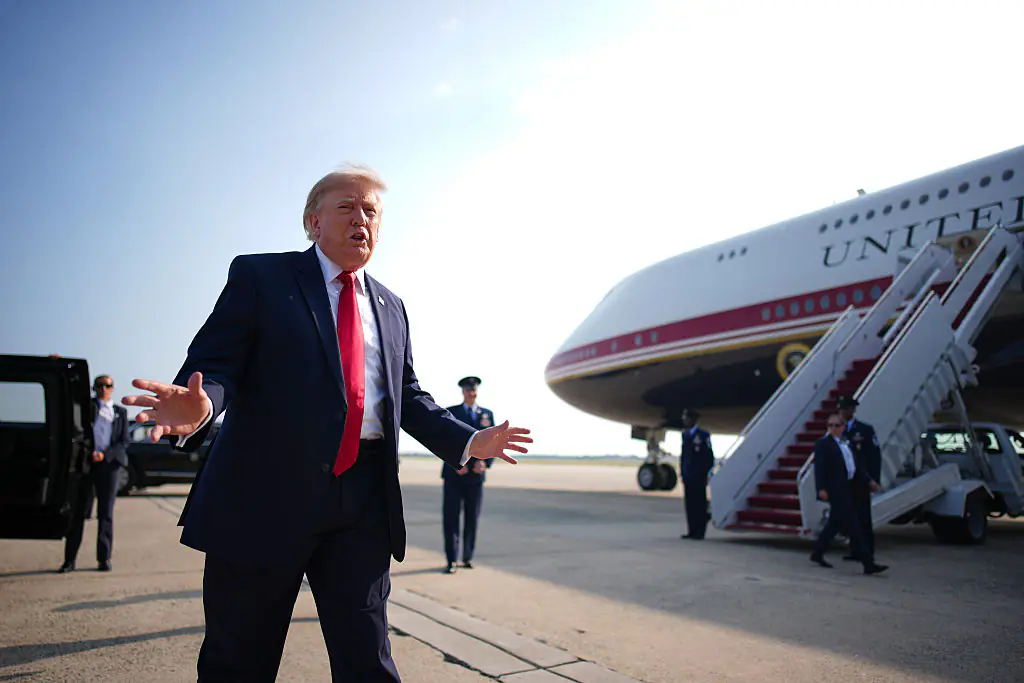
The payment would have been funded by tariff revenue, after the US President introduced the trading laws last year.
This problem has no clear end in sight, despite many comparing the situation to Covid-era stimulus checks, but there is a massive difference.
Six-or-so years ago, payments were approved by Congress and sent by the IRS under specific relief laws, but this new proposal hasn't made it that far.
In fact, there is no confirmed payment date, in addition to an absence of an IRS claim portal, as well as there being no approved eligibility list for a $2,000 federal stimulus check, according to Marca.
Donald Trump has suggested sending tariff-funded payments to Americans in the past, as his supporters have argued that this revenue could be returned to consumers who pay higher prices on imported goods.
However, critics say that tariffs are passed on more often than not due to their higher prices, so the majority of households have already paid the price.
There is also the question of money.
A $2,000 payment program would cost the government hundreds of billions of dollars, depending on who qualifies, as experts have warned that tariff revenue may not be enough to cover checks without causing a financial strain.
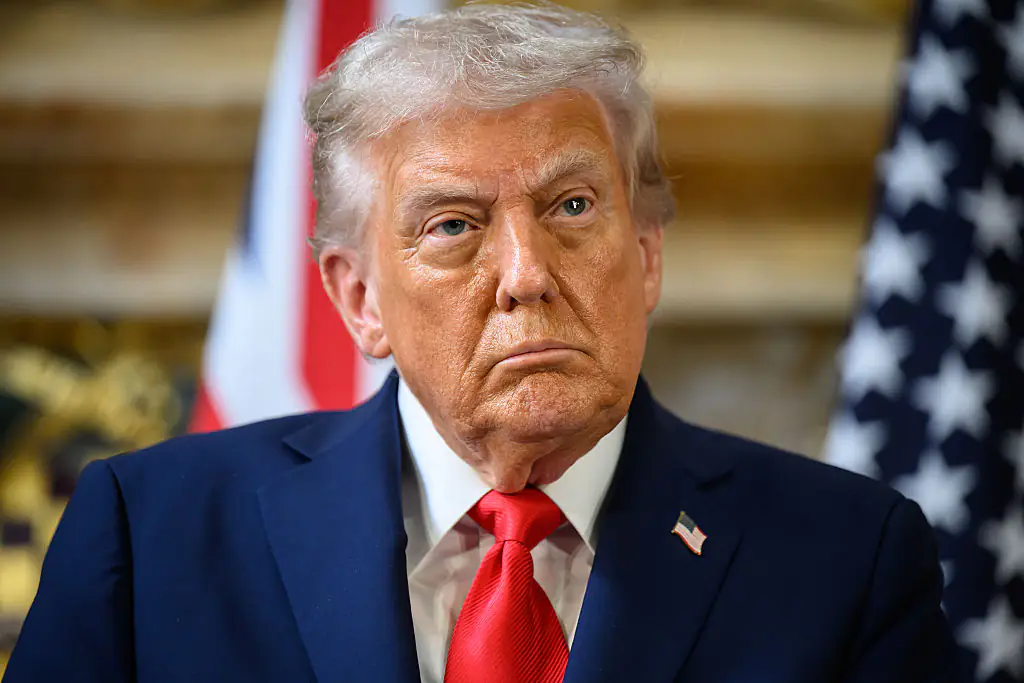
People should be cautious about the July 2026 stimulus checks, but nobody needs to apply for any sort of payment yet.
You should avoid paying any fees, sharing bank details with a third-party site or using an alleged tariff refund portal - these don't exist.
If necessary, the IRS and Treasury Department would release official guidance, as they did with previous stimulus checks.
But until that happens, the $2,000 payment remains a proposal, nothing more.
Americans, sadly, shouldn't expect a federal $2,000 stimulus check in July 2026 unless a law is passed by Congress and the government makes an official announcement.
us2 min(s) read
us3 min(s) read
us3 min(s) read
us3 min(s) read
us3 min(s) read
Since President Donald Trump promised millions of Americans a payout of up to $2000 as a part of his “tariff dividend,” no federal payment has been approved, and people have been left wondering if the proposed payments will happen in time for the US’s 250th birthday.
The widespread rumors stem from a policy proposal floated by Donald Trump, which would see lower- and middle-income Americans receiving a federal payment.
Under the proposed plan, Americans who paid too much tax on imported goods would be compensated.
However, there are understandably funding issues with the plan. Paying millions of Americans $2,000 each could cost the administration billions, and financial analysts have warned that tariff revenue may not be enough to cover checks at that scale without dipping into the federal budget.
Because no such legislation has passed, authorities and financial bodies are urging the public to remain vigilant against phishing scams and fraudulent websites, phone calls, or text messages encouraging people to apply for a payment claim, as it is likely a scam.
Reportedly, the Internal Revenue Service (IRS) has not launched a "tariff refund portal." No one needs to apply for a payment, pay a processing fee, or share private banking details with third-party sites to claim these non-existent funds.
The IRS and Treasury Department have declared that they would release official guidance on how to do so.
However, this would only happen if Congress passes a law approving the $2000 stimulus check and the government announces an official payment plan.
Until then, sadly, the $2000 payout remains a proposal and not a confirmed benefit, so Americans can’t expect a cash injection in time for July 4th celebrations.
The stimulus checks scheme is similar to the pandemic-era payouts in which the CARES Act, passed in March 2020, allocated $2.2 trillion in economic relief, including $300 billion in one-time cash payments to eligible individuals, with most receiving $1,200.
A second scheme, the American Rescue Plan Act, launched in 2021, provided an additional $1.9 trillion in support, including $300 billion in direct payments to individual taxpayers with incomes of $75,000 or less.
President Donald Trump’s promise to send out $2,000 payments to millions of Americans has recently taken an interesting turn.
In a new video update, YouTuber Blind to Billionaire has provided details on the potential for even more cash, suggesting that the $2,000 could be just the minimum amount. With new statements from Trump signaling changes, many Americans might be in for a bigger payout.
While it’s been a rollercoaster journey for those waiting for a $2,000 stimulus check, recent comments from Trump have brought hope to many.
In a speech on January 20, Trump confirmed his commitment to distributing money to American citizens, this time in the form of a $2,000 tariff rebate check. However, he made it clear that the final amount could be even higher.
According to Trump, the amount would be at least $2,000, but depending on factors like the revenue generated from tariffs, that figure could go up to $2,500 or even $3,000. While it’s still unclear how much people will receive, it’s evident that the president is aiming for a substantial dividend.
In his recent remarks, Trump acknowledged that the funds for the payment would come from the tariffs imposed on other countries. The U.S. government has generated significant revenue from these tariffs, and Trump believes that it’s time to return some of that money to the American people.
The president went on to say per The New York Post, “We’ll be able to issue at least a $2,000 dividend and also pay down debt for the country.”
This is the first time that Trump has mentioned the possibility of a $2,000 dividend as part of a broader economic strategy. While it’s uncertain exactly when or how the checks will be distributed, his words suggest that the payments may be coming soon.
As for who will qualify, Trump also mentioned that the payments would likely be limited to people with lower incomes, although the exact income thresholds remain unclear.
One of the most significant aspects of Trump’s statement involves the possibility of bypassing Congress. He noted that it might not be necessary to go through the legislative process to distribute these checks.
"I don't think we would have to go the Congress route,” Trump said, suggesting that the payments could be made directly through an executive order. If that’s the case, the distribution process could be faster and simpler, potentially reaching Americans sooner than many expect.
Trump’s comments have ignited renewed interest in the $2,000 payment promise, with many wondering when they might see the money. Although there is still much to be determined, the notion that the amount could exceed $2,000 gives hope to millions who are struggling financially.
Whether the checks will be issued before the end of 2026 or sooner, one thing is for certain: the potential for more cash is on the horizon.
President Donald Trump has repeatedly promised $2,000 tariff dividend checks to most Americans next year, raising hopes for a much-needed financial boost amid rising costs.
“We’ve taken in hundreds of billions of dollars in tariff money. We’re going to be issuing dividends… probably the middle of next year, a little bit later than that, of thousands of dollars for individuals of moderate income, middle income,” Trump said on Monday.
But economists and analysts caution that the odds of these checks actually hitting bank accounts are extremely low.
Credit: Leon Neal / Getty Images.
Perhaps the biggest roadblock? The numbers don’t add up. While new tariffs are projected to raise $158.4 billion in 2025 and $207.5 billion in 2026, estimates suggest the dividend checks would cost far more than that.
For example, a plan covering only tax filers and their spouses under a $100,000 income cap would cost $279.8 billion – already $121 billion over the projected 2025 revenue. More expansive scenarios including dependents and non-filers could reach $606.8 billion, nearly double the combined 2025–2026 tariff intake.
“This is like the magic money tree. You just go to it anytime you need money. Of course, that’s not reality,” Scott Lincicome, vice president of general economics at the Cato Institute, told CNN.
Even if the math worked, Congress would still need to sign off on the payments – and there’s little reason to think lawmakers would back another massive outlay. Republican deficit hawks have already opposed Trump’s previous tax and spending initiatives. With the national debt surpassing $38 trillion, a $2,000-per-person payout is politically fraught.
“I find it extremely implausible that Republican budget hawks are just going to be okay with blowing another $300 billion to $600 billion,” Lincicome added.
Even if approved, economists warn that the payments could worsen inflation. Some Americans would spend the money immediately, boosting demand without increasing supply – a recipe for higher prices. Stimulus checks have been blamed, at least in part, for the 2021 inflation spike, and some Trump-era economists argue tax cuts are a better tool.
Stephen Moore, a former Trump economic adviser, told CNN: “If there is tariff revenue, that should be used to cut income taxes across the board. Stimulus checks only stimulate inflation.”
Credit: Andrew Harnik / Getty Images.
Finally, legal challenges loom. The Supreme Court recently questioned the legality of Trump’s global tariffs. If the court strikes down a majority of the new tariffs, around 75% of projected revenue could vanish, effectively ending the dividend plan before it begins.
Experts agree: the only way $2,000 checks would actually materialize is if the U.S. economy faces a severe emergency – a recession, rising unemployment, or another crisis. In that case, the White House could argue that direct payments are necessary to stabilize the economy.
“It’s almost like we shouldn’t want stimulus checks to happen,” said Ed Mills, a Washington policy analyst. “This is a break-the-glass, use-in-case-of-emergency tool.”
Renewed questions are emerging about whether a promised $2,000 payment from President Donald Trump could actually become a reality in 2026.
Last year, the 79-year-old took to Truth Social to tout what he described as massive revenue generated through tariffs, suggesting that some of that money could be returned directly to the public.
“People that are against Tariffs are FOOLS! We are taking in Trillions of Dollars and will soon begin paying down our ENORMOUS DEBT, $37 Trillion. Record Investment in the USA, plants and factories going up all over the place," he wrote.
"A dividend of at least $2000 a person (not including high-income people!) will be paid to everyone," he added.
Trump has vowed to issue dividend checks sometime in 2026, before the midterm elections.
However, there has been no approval from Congress or the IRS for this or any other fourth stimulus check to date, per Philly Burbs.
The government previously issued three stimulus checks as part of COVID-era relief efforts. The third and final payment had an April 15, 2025, deadline to claim, and all opportunities to file or claim those funds have now passed.
Although rumors of a fourth stimulus check continue to circulate on social media and various unverified websites, there has been no official confirmation from Congress or the IRS.
Any claims suggesting otherwise should be approached with caution, as they could amount to misinformation or attempted fraud.
Trump has previously said the proposed dividend checks would go to "individuals of moderate income," though he has not clearly defined who would fall into that category.
According to the Pew Research Center, the 2024 middle class includes households earning between $55,820 and $167,460, based on the national median income.
By comparison, previous federal stimulus programs provided full payments to individuals earning up to $75,000 and couples earning up to $150,000, offering a possible benchmark for how eligibility could be structured.
U.S. Treasury Secretary Scott Bessent offered further insight during a November appearance on Fox & Friends, saying: "The president's talking about a $2,000 rebate, and that would be for families making less than, say, $100,000."
Bessent noted that the income threshold was still under discussion.
Although Trump has repeatedly said the payments would be distributed in 2026 before the midterms, the proposal remains tied to legal developments.
The Supreme Court is expected to rule soon on whether to strike down all or part of the tariffs and clarify how importers would receive tariff refunds.
That decision could play a significant role in determining whether any dividend payments move forward.
For now, there is no confirmed timeline for when, or if, Americans might receive a $2,000 payment.
Donald Trump’s promise of $2,000 tariff dividend checks to nearly every American citizen has sparked a mix of excitement and confusion.
The proposed payments, which would be funded by the revenue generated from tariffs on foreign goods, have been discussed by the president, but new details are slowly emerging about who will actually be eligible for the checks, and when they might arrive.
While the president first introduced the idea of dividend rebates in July, promising that Americans would receive "at least $2,000," the specifics of the plan remain unclear.
According to recent reports, the payment date has now shifted, with Trump suggesting that the checks may not arrive until the end of 2026, despite previous projections that they would be issued around the middle of the year.
In a recent interview with The New York Times, when asked about the timing of the dividend checks, Trump appeared to have forgotten about his earlier promise, asking: “I did do that? When did I do that?”
However, he later clarified that the checks would likely be distributed "toward the end of the year" after tariff revenues come in.
The president’s inconsistency has raised questions about the feasibility of the $2,000 checks, especially as the government continues to struggle with the legal complexities surrounding the tariffs.
The 79-year-old had initially insisted that he could give out the checks without congressional approval, but experts and government officials have pointed out that legislation would likely be needed to move forward with the plan.
In addition, the Supreme Court is expected to rule on the legality of Trump’s global tariffs soon, which could create further complications.
As the plan to distribute $2,000 checks progresses, the eligibility criteria have also come into question, particularly for married couples.
Experts, including YouTuber and SSA expert Blind to Billionaire, have explained that the key factor for determining who will receive the checks is income.
According to Blind to Billionaire, individuals earning below $75,000 a year will likely qualify, with the threshold doubling for married couples.
That means married couples with a combined income under $150,000 should be eligible for the payout.
However, the details remain somewhat unclear, with inconsistent information being shared by government officials and no written plan from the administration.
Furthermore, there are questions about whether the $2,000 payment is economically viable, with experts like Scott Lincicome from the Cato Institute warning that sending out checks could be "inefficient".
"Sending out checks is inefficient and distortive wealth redistribution. It’s far better to just nix the tariffs and let Americans keep their dollars in the first place," he told USA TODAY.
Another major concern about the tariff dividend checks is the potential strain they could place on the US economy.
The Committee for a Responsible Federal Budget (CRFB) has criticized the plan, estimating that issuing $2,000 checks to all eligible Americans could cost around $600 billion, while tariff revenues are expected to generate only $300 billion annually.
With the national debt climbing to record levels and annual budget deficits nearing $2 trillion, the CRFB argues that the government should focus on lowering the deficit rather than spending revenue on cash dividends.
Despite these concerns, the Trump administration has continued to push the idea of using tariff revenues for direct payments to Americans.
Whether this plan will come to fruition remains uncertain.